Falls & Fall Prevention
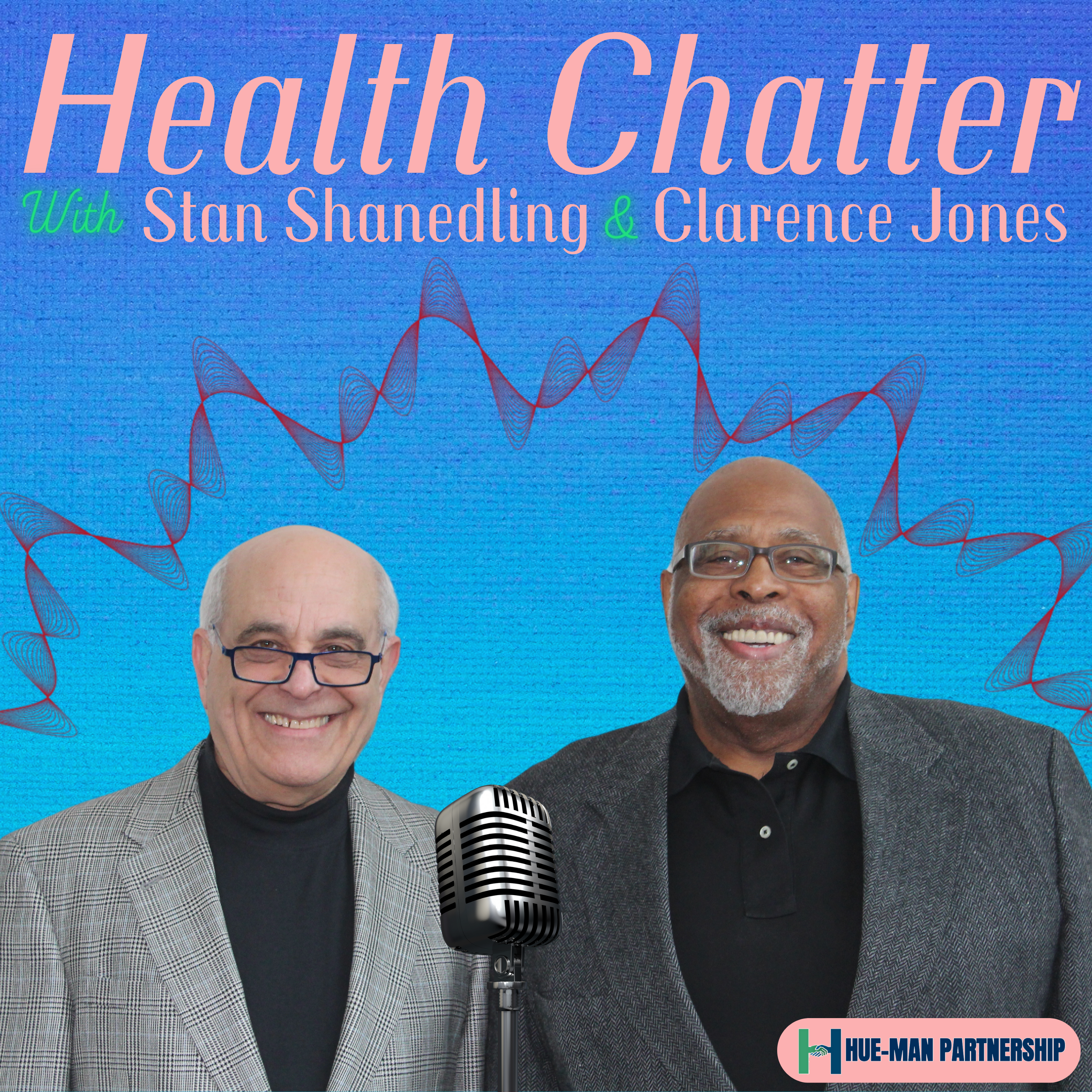


Stan, Clarence, Barry, and the Health Chatter team chat with Mary Gray, Director of Rehabilitation at HealthPartners, about falls and fall prevention.
Mary oversees rehabilitation services across HealthPartners’ community-based hospitals and clinics, including cardiac rehabilitation. A licensed physical therapist with 27 years of experience, she brings deep expertise and passion for geriatrics—particularly fall prevention, dementia and age-friendly care, osteoporosis management, and frailty. Beyond her professional work, Mary is also a caregiver to her 95-year-old father living with dementia, giving her both clinical and personal insight into the realities of aging and safety.
Join us for an enlightening discussion about falls and fall prevention, and stay tuned to gain fresh perspectives on how proactive, age-friendly strategies can help older adults stay safe, independent, and thriving.
Join the conversation at healthchatterpodcast.com
Brought to you in support of Hue-MAN, who is Creating Healthy Communities through Innovative Partnerships.
More about their work can be found at https://www.huemanpartnershipalliance.org/
Key Facts
- It’s a misconception that only older adults fall, falls affect us all
- Falls are Preventable.
- Every year more than one in four older adults reported falling
- 41,000 older adults die as a result of a fall every year, that's 112 older adults every day.
- More than 95% of hip fractures are caused by older adult falls.
- Falls can have serious consequences, like death, limited mobility, and loss of independence.
- Each year, 3 million older adults are treated for a fall injury.
- Tinetti et al. in 1988 defined a fall as an event that results in a person coming to rest on the ground or other lower-level unintentionally, which is not as a result of a major intrinsic event (such as stroke) or overwhelming hazard.
- Falls occur with high frequency in the older adults, children, and athletes.
Know your risk!
Use the national council on aging’s Falls Free CheckUp® tool to check your risk of falls: https://www.ncoa.org/tools/falls-free-checkup/
Practice Makes Perfect
Whether you choose to sit on the floor for an activity, such as playing with your grandchildren or complete a household task, or because you’ve fallen, your ability to get down to and rise from the floor can make a big difference.
- Ease in getting to and from the floor can be important for maintaining your independence and continuing to enjoy the activities you love.
- Only about half of people who fall can easily get back up on their own, even without an injury.
- By learning how to safely rise from the floor, you can avoid staying down for long periods and reduce the risk of complications, taking greater control of your health and well-being.
CDC’s STEADI
CDC developed the STEADI (Stopping Elderly Accidents, Deaths & Injuries) initiative which includes educational materials and tools to improve fall prevention.
Speak up
Talk openly with your loved one and their healthcare provider about fall risks and prevention.
- Tell a healthcare provider right away if your loved one has fallen, or if they are worried about falling, or seem unsteady.
- Keep an updated list of your loved one’s medications. Show a healthcare provider or pharmacist all of their medications, including over-the-counter medications, and supplements. Discuss any side effects, like feeling dizzy or sleepy.
- Ask their healthcare provider about taking vitamin D supplements to improve bone, muscle, and nerve health.
- Keep Moving
- Activities that improve balance and strengthen legs (like Tai Chi) can prevent falls.
- Exercise and movement can also help your loved one feel better and more confident.
- Check with their healthcare provider about the best type of exercise program for them
- Have Eyes and Feet Checked
- Being able to see and walk comfortably can prevent falls.
- Have their eyes checked by an eye doctor at least once a year.
- Replace eyeglasses as needed.
- Have their healthcare provider check their feet once a year.
- Discuss proper footwear, and ask whether seeing a foot specialist is advised.
- Make the Home Safe
- Most falls happen at home.
- Secure some support: Buy a shower seat, grab bar, and adjustable-height handheld shower head to make bathing easier and safer.
- Light it up: Replace burnt-out bulbs with bright, non-glare lightbulbs.
- Have a seat: Place a sturdy chair in your bedroom so you can sit while getting dressed.
- Clear the way: Keep items off the stairs, and fix simple but serious hazards such as clutter and throw rugs.
- Store for success: Keep frequently used items between your waist and shoulder height.
- Most falls happen at home.
Feet and Footwear
What foot problems are associated with falls?
Foot related risk factors that increase fall risk:
- Increased foot pain
- Reduced flexibility in ankle joint
- Reduced calf muscle strength (the muscle that helps you rise on the balls of your feet)
- Reduced sensation resulting from neuropathy (nerve damage)
- Presence of a bunion (hallux valgus deformity) or toe deformities
Sources:
https://www.cdc.gov/steadi/media/pdfs/2024/08/STEADI_Feet_Footwear_Guide_O.pdf
https://www.cdc.gov/steadi/patient-resources/index.html
https://www.cdc.gov/steadi/patient-resources/index.html
https://www.cdc.gov/falls/about/index.html
Health Chatter: Falls and Fall Prevention
Stanton Shanedling: Hello, everybody! Welcome to Health Chatter! Today's show is on falls and fall prevention, which is quite timely as it gets icier and snowier outside. It’s going to be a good show. We have our great background crew that helps us with all our shows: Maddy Levine-Wolf, Aaron Collins, Deondra Howard, Matthew Campbell, and Sheridan Nygard. They do our marketing, production, and research, and have been with us since day one.
Clarence Jones is my co-host, and while our medical advisor Dr. Barry Baines isn't with us today—he’s on his way to New York City—he promised he would listen to the show afterwards. Also, a big thank you to our sponsor, Human Partnership, a community health organization that does remarkable work getting people engaged and knowledgeable about their health issues. You can check them out at HumanPartnershipAlliance.org and find our previous shows at HealthChatterPodcast.com.
Today, we're talking about falls and how to prevent them. We have a wonderful guest, Mary Gray, who serves as the Director of Rehab for HealthPartners here in Minnesota, overseeing rehabilitation services across community-based hospitals and clinics. She has been a physical therapist for over 27 years and has dealt with a variety of issues regarding fall prevention, dementia, and age-related care. She’s also a mother of six and a caregiver for her 95-year-old father, who has dementia. Thank you for joining us, Mary.
Stanton Shanedling: So, let's talk about falls. I was thinking about how when I used to walk my dog, they have four legs, so they are much more stable than we are. We don't have that advantage. The data on falls is scary, and I'm sure most of us aren't even aware of how many people are affected. Mary, give us a broad overview from your perspective and practice.
Mary Gray: Falls are one of the leading causes of emergency room visits for people over the age of 65. Being part of seven different hospital systems, I see the impact firsthand. In Minnesota, the newest research suggests that 71,000 falls were reported in people 65 and older in 2021. It is the leading cause of those ER visits. We also know that people over the age of 85 are seven times more likely to die from a fall than those between 65 and 84. It increases with age, and we know we’re living longer.
Stanton Shanedling: That's significant.
Mary Gray: One in four older adults falls. When you start to get into that age range—myself included, as I’m starting to creep into middle age—that's significant. It is a prevalent public health concern. Another interesting fact is that these non-fatal falls cost about $80 billion in healthcare costs, which is expected to increase to between $120 and $130 billion by 2030. It’s a public health issue that requires a collective effort; no one hospital system can do it alone.
Stanton Shanedling: Those figures are astounding. As a physical therapist, what percentage of your patients are you seeing specifically because they had a fall?
Mary Gray: Because I specialized in falls, I tend to see a higher percentage in my caseload. I would say 15% of our patients are seeing us directly because of a fall. However, we probably don't capture all of those who come in with shoulder or back pain that started from a fall long before. It’s always underestimated and underreported.
Mary Gray: Even as a caregiver for my parents, when doctors would screen them by asking, "Have you had a fall?", my parents would say "no." I would be in the background shaking my head because I knew they had. They just managed to get up on their own, and they were embarrassed by having a fall. I guarantee if I asked everyone on this call, each of us has had some sort of fall at some time.
Stanton Shanedling: Exactly. Sometimes you just barely catch yourself. I want to link medical conditions with falls. My mother, who passed away eight years ago, fell secondary to a urinary tract infection, which I wasn't aware at the time could be so disorienting. What can you tell us about medical conditions that contribute to falls?
Mary Gray: There are many chronic health conditions that increase the risk for falls. People with neurological conditions like Parkinson's or stroke have higher risks due to secondary impairments. People with diabetes also have a higher incidence due to peripheral neuropathy affecting sensory systems. Then there is blood pressure—both high and low. People being treated for high blood pressure can experience orthostatic hypotension, which increases fall risk. As we get older, it becomes multifactorial. One condition might not be a problem, but add high blood pressure, diabetes, and Parkinson's, and the comorbidities contribute significantly.
Stanton Shanedling: Mary, I want to talk about something that seems simple but is often overlooked: footwear. I’ve noticed a lot of people in the winter wearing big, clunky boots or, conversely, slippers that have no grip at all inside the house. How much of a factor is footwear in your patient assessments?
Mary Gray: Footwear is a huge modifiable risk factor. I tell my patients, "If you wouldn't run a 5K in it, don't wear it for your daily activities." Slippers are notorious. They often lack heel support, and the material can be slippery on hardwood or tile floors. You need a shoe with a firm heel counter—the back part that cups your heel—and a non-slip sole. Even in the house, especially if you have balance issues, a shoe with a proper tread is much safer than just socks or loose slippers.
Stanton Shanedling: That makes sense. What about the "environment" side of things? We have a lot of people who have lived in the same house for 40 years. They have rugs, they have cords, they have stairs. How do you go about auditing a home for safety?
Mary Gray: We do home safety assessments. We look for the "trip traps." Throw rugs are the number one offender. They slide, they bunch up, and they catch toes. We also look at lighting. As we age, our eyes need more light to see the same contrast, yet many people keep their homes dimly lit because it feels "cozy."
Mary Gray: We recommend motion-sensor night lights, especially for the path between the bed and the bathroom. If you can’t see the floor, you can’t navigate it safely. And decluttering—it sounds simple, but moving those stacks of books or clearing the pathway to the kitchen can be the difference between staying independent and ending up in the hospital.
Clarence Jones: Mary, I want to ask about the "fear of falling." I’ve seen this with my own relatives. They have one little stumble, and then they stop doing everything. They stop going to the grocery store, they stop walking in the park, and they just sit in their chair. Does that "fear" actually make the problem worse?
Mary Gray: It creates a vicious cycle. We call it the "Fear-Avoidance Cycle." You fall, so you become afraid. Because you are afraid, you stop moving. Because you stop moving, your muscles get weaker, and your balance gets worse. Because you are weaker, you are more likely to fall again. The goal is to break that cycle. We want people to stay active, but we want them to do it with the right tools—maybe a cane, a walker, or a physical therapy program that specifically addresses gait and strength.
Stanton Shanedling: That's a profound way to put it. It’s a "use it or lose it" scenario.
Mary Gray: Exactly. And if you do fall, it’s about knowing how to get up. Many people just panic. We teach our patients how to safely roll onto their side, get to their hands and knees, and use a piece of stable furniture to help them get back to a standing position. Panic is often the biggest enemy after the fall itself.
Stanton Shanedling: I want to bring it back to a practical level for our listeners who might be at home right now, perhaps feeling a bit worried about their own balance or their parents' safety. Mary, what is the role of medication management here? We’ve touched on this in other shows, but it seems relevant here, too.
Mary Gray: It is absolutely critical. We call it "polypharmacy" when a patient is on five or more medications, and the risk of a fall increases exponentially with every additional pill. Some medications, like sleep aids, sedatives, or even certain blood pressure medications, can cause dizziness or delayed reaction times.
Mary Gray: I always encourage my patients to have a "medication review" with their primary doctor or a pharmacist at least once a year. Sometimes, simply lowering a dose or changing a medication to a different time of day can significantly improve a person’s stability.
Clarence Jones: That's such a great point. It’s not just about adding new things to help you, it's about looking at what you're already taking that might be hurting your balance.
Mary Gray: Exactly. And to bring it back to what we said earlier, don't ignore those "near misses." If you stumble, even if you don't fall, take note of why. Was the lighting bad? Was the floor wet? Were you rushing? Did you feel lightheaded? Those "near misses" are your body's way of telling you that you need to make a change before the next time it happens.
Stanton Shanedling: That is a great perspective. It’s about being proactive rather than reactive. Mary, thank you so much for joining us. This has been a truly informative look at a topic that affects so many families.
Mary Gray: Thank you for having me. I hope this helps even one person prevent a fall this winter.
Stanton Shanedling: For our listening audience, if you missed any part of today’s conversation, remember you can find the transcript and previous episodes on our website at HealthChatterPodcast.com.
To our crew—Maddie, Erin, Deondra, Matthew, and Sheridan—thank you for your hard work behind the scenes. And to all of you listening, remember: stay safe, watch your step, and keep health chatting away!


