Menopause
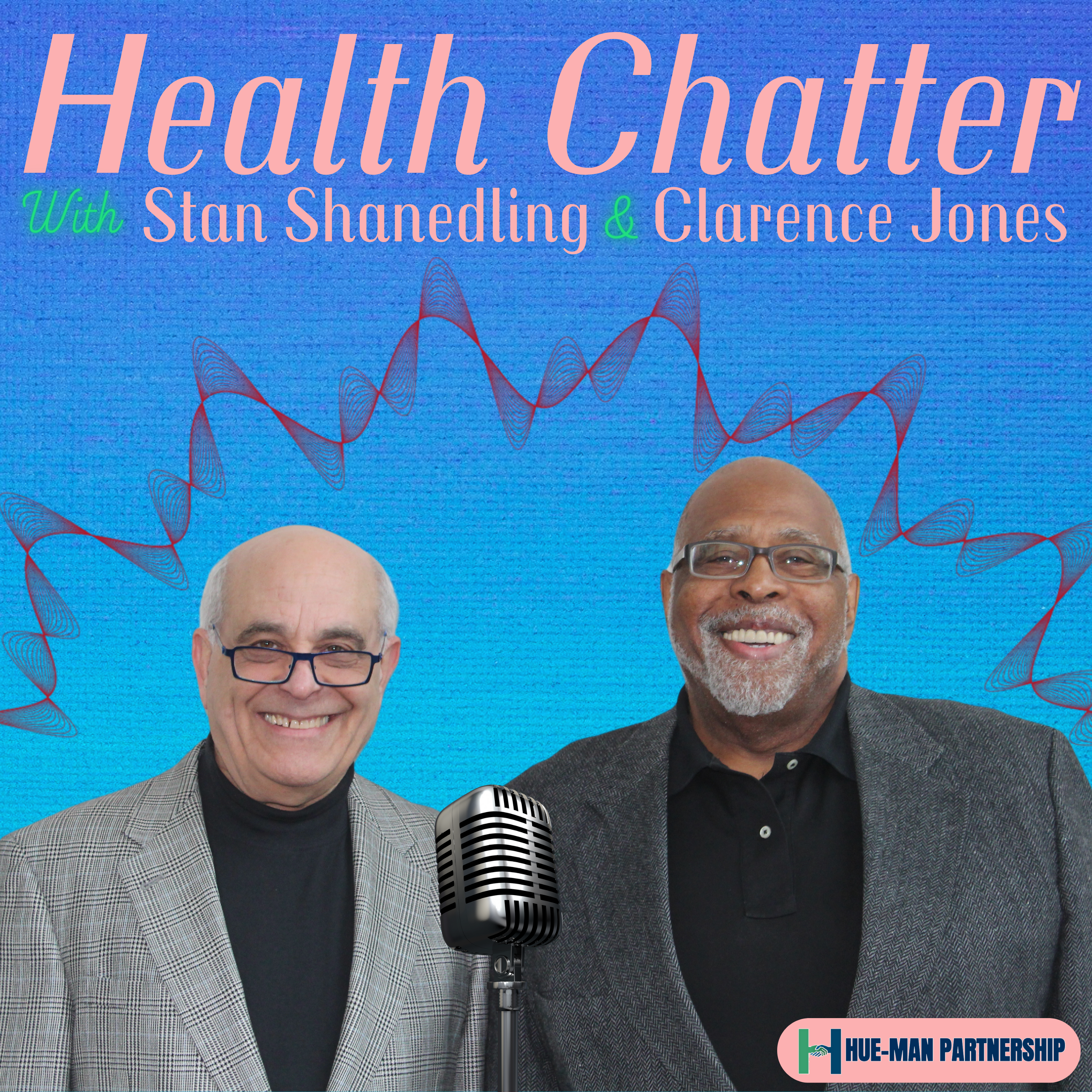



Stan, Clarence, Barry, and the Health Chatter team chat with Dr. Robin Austin, Associate Professor at the University of Minnesota School of Nursing, about menopause and the often-overlooked realities of midlife women’s health.
Dr. Austin brings more than 20 years of clinical experience spanning pain management, women’s health, and integrative health. With both a DNP and PhD in Nursing Informatics—and dual training as a chiropractor and nurse—her work blends clinical insight with data science to address whole-person needs. Her research focuses on chronic pain and menopause, and she is a Research Mentee with the The Menopause Society as well as a Fellow of the American Academy of Nursing and the American Medical Informatics Association.
Join the conversation at healthchatterpodcast.com
Brought to you in support of Hue-MAN, who is Creating Healthy Communities through Innovative Partnerships.
More about their work can be found at https://www.huemanpartnershipalliance.org/
Research
What is menopause?
Permanent ending of menses in women
Menopause is a point in time when a person has gone 12 consecutive months without a menstrual period. Menopause is a natural part of aging and marks the end of your reproductive years. On average, menopause happens at age 52. (Link)
What is the biological process of menopause?
Natural process when ovaries stop producing reproductive hormones
There are 3 stages to menopause
Perimenopause can begin eight to 10 years before menopause when your ovaries gradually produce less and less estrogen. It usually starts when you’re in your 40s. You can be in perimenopause for several months or several years. Many people begin feeling symptoms like irregular periods, hot flashes and mood swings in perimenopause.
Menopause: Menopause is the point when you no longer have menstrual periods. At this stage, your ovaries don’t release eggs, and your body doesn’t produce much estrogen. A healthcare provider diagnoses menopause when you’ve gone without a period for 12 consecutive months. Unlike the other stages, menopause itself is a defined moment, so you don’t stay in this stage.
Postmenopause: This is the time after menopause. You stay in postmenopause for the rest of your life. While most symptoms of menopause ease up in postmenopause, you can continue to have mild menopausal symptoms for several years in postmenopause. People in the postmenopausal phase are at an increased risk for osteoporosis and heart disease due to low estrogen levels.
Symptoms of menopause
Irregular periods or periods that are heavier or lighter than usual
Hot flashes, also known as vasomotor symptoms (a sudden feeling of warmth that spreads over your body)
Night sweats and/or cold flashes
Vaginal dryness that causes discomfort during sex
Urinary urgency (a pressing need to pee more frequently)
Difficulty sleeping (insomnia)
Emotional changes (irritability, mood swings or depression)
Dry skin, dry eyes or dry mouth
Worsening premenstrual syndrome (PMS)
Breast tenderness
Racing heart
Joint and muscle aches and pains
Changes in libido (sex drive)
Difficulty concentrating or memory lapses (often temporary)
Weight gain
Caring for menopause, working with your care team
Hormone therapy (HT). A term used for hormones offered to those going through menopause at natural ages (after age 45).
Hormone replacement therapy (HRT). The word replacement is added when using hormones to treat menopause which occurs at a young age, especially before age 40.
It’s important to talk to your provider while you’re going through menopause to craft a treatment plan that works for you. Every person is different and has unique needs. People experiencing menopause before age 40 should be offered hormone replacement therapy, except in rare circumstances (such as a personal history of breast cancer at a young age)
Health Chatter: Navigating Menopause
Stanton Shanedling: Hello, everybody! Welcome to winter, and our show today is on menopause and all the information around it—and there is a lot. Hopefully, it will be educational for all of you. We have a wonderful guest with us, Dr. Robin Austin, who I’ll introduce in just a second, so stay with us.
We have a great crew that helps us do all our shows, and I like to introduce them and make sure they’re recognized because not everybody listens to every show. If you listen to just this one, you’ll know we have a great crew in the background. Maddie Levine-Wolf, Aaron Collins, DeAndra Howard, Matthew Campbell, and Sheridan Nygaard are next to none. They’ve been with us since day one, doing our background research, production, marketing, and transcribing the shows.
Clarence Jones is my co-host and colleague. Clarence and I have been doing this show for quite a while now. He is our community engagement guru and brings that community perspective. Dr. Barry Baines is our medical advisor, and he provides that wonderful medical twist to the show. Our sponsor is Human Partnership, a community health organization that provides wonderful programming and connections. You can find them at humanpartnershipalliance.org. And of course, you can find our shows at healthchatterpodcast.com. We are closing in on our 140th show, which we are very proud of.
Stanton Shanedling: Today, it’s really a special treat to have Robin Austin here. Robin is an Associate Professor at the University of Minnesota School of Nursing and the Director of the Center for Nursing Informatics. She is also a Fellow of the American Academy of Nursing. Robin, welcome to the show!
Dr. Robin Austin: Thank you so much for having me! I’m happy to be here.
Stanton Shanedling: It’s great to have you. This is a topic that I think is on the minds of a lot of women in midlife, maybe even more so today than it was back in the day. Let's start with the basics. What is menopause?
Dr. Robin Austin: That’s a great question. We often think of it as just one point in time, but it’s really a trajectory. We have perimenopause, which can start in your 40s and last anywhere from seven to ten years. That is when your hormones—specifically estrogen and progesterone—start to fluctuate and trend downward.
Menopause itself is actually diagnosed retrospectively. You are in menopause once you have gone twelve consecutive months without a period. After that twelve-month mark, you are technically post-menopausal.
What is really important to realize is that women are living longer now. We are spending about a third of our lives in post-menopause. That has huge implications for healthy longevity, chronic disease management, and how we live the later part of our lives.
Stanton Shanedling: That’s a significant amount of time. Clarence, I know you had some questions about the community side of this.
Clarence Jones: Yeah, Robin, welcome. I’m interested in the "why." Why is this becoming such a prominent topic now, and how does community engagement factor into how women experience this?
Dr. Robin Austin: I think it’s coming to the forefront because women are speaking up more. For a long time, it was a "silent transition." You just dealt with it. But now, women in midlife are often at the peak of their careers, they are the "sandwich generation" taking care of kids and aging parents, and they are realizing that these symptoms—the brain fog, the fatigue, the hot flashes—are impacting their ability to function at the level they want to.
Dr. Barry Baines: I want to expand just a little bit. I think what we'll wind up talking about most is not so much the signs of menopause—which is simply when a woman ceases to have menses—but the symptoms of menopause that are front and foremost from a medical management perspective .
Specifically, there are what we call "vasomotor symptoms," which most people know as hot flashes . There is a huge range here. These symptoms can start as early as 40 or even younger, and from my experience, I can tell you they can sometimes persist beyond age 70 . It is such an individual situation that needs to be understood . There is currently a big lack of education about what menopause means and its significance.
Clarence Jones: To that point, what should a partner know—someone who has not experienced menopause themselves ?
Dr. Robin Austin: That is a great question. Because it is so individualized, many women feel very dismissed at times—whether by the health system, family members, or partners . The most important thing is the act of listening and recognizing that what she is experiencing is real. It is not in her head.
Reaffirm that there are treatable methods and help her figure out what is right for her. If you aren't getting answers from one healthcare provider, it is okay to move to another. It’s a team effort. Being supportive means saying, "I'm with you. Do you want me to go to the appointment? Do you want to download when you get home?" . We have to acknowledge that what worked one year might need to be adjusted the next.
Stanton Shanedling: Let's talk about treatment. As women get older, they may be dealing with other chronic conditions or sicknesses. How does a physician help a patient link all of this together ?
Dr. Robin Austin: A provider can help tease out what is a hormonal issue versus a chronic condition, like type 2 diabetes or heart disease. We see many women in their 40s suddenly dealing with sleep disturbances, mood swings, anxiety, depression, or even new ADHD diagnoses, which can certainly be hormonal . You don't have to "grin and bear it" or feel like you're holding onto the steering wheel too tight; there are treatments available .
You also see a lot on social media about weight gain and "hacks" like Zone 2 training or lifting heavy. While exercise is essential and hasn't changed, women do go through a metabolic shift because estrogen has impacts we haven't fully realized . I’m always leery of "quick fixes" on Instagram. You want sound, evidence-based advice that is guideline-approved .
Stanton Shanedling: Are there population differences in how this is experienced? For example, do African American or Caucasian women deal with it differently ?
Dr. Robin Austin: Absolutely. I have a colleague who works with Latino populations where menopause is approached as a community effort. We also know that African American women often experience more severe symptoms, yet these are frequently less addressed within the healthcare system . I’m also very concerned about bone health; women can lose 30% or more of their bone density during this transition, but they often aren't scanned for it early enough .
Dr. Barry Baines: Robin, I'm interested to hear about the role you play with the informatics piece and its impact on menopause.
Dr. Robin Austin: A few years ago, I was going through this transition myself and realized there was very little information or research out there. Even with access to healthcare databases, I couldn't find what I needed. My husband finally said, "I think you can do something about that".
My informatics brain went into action. How are we documenting menopause in electronic health records? How are we standardizing data collection for symptoms that are so varied ? If we don't have good data, we can't improve care. I joined the Menopause Society to advocate for the research needed to highlight these gaps .
Dr. Robin Austin: ...and that is what really pushed me to join the Menopause Society and advocate for better data standards. If we don’t have structured data in the electronic health record, we can’t analyze it to identify the gaps in care or understand how different populations are experiencing these symptoms.
Clarence Jones: Robin, you mentioned earlier that there are many treatments available. Can you clarify the distinction between hormonal and non-hormonal approaches, especially since there is so much conflicting information online?
Dr. Robin Austin: Yes, and this is where you really need to work with a provider who is knowledgeable about menopause. We have hormone replacement therapy (HRT), which is the most effective treatment for hot flashes and night sweats. But for women who cannot take hormones—or choose not to—we have non-hormonal options, including certain SSRIs and newer medications specifically approved for vasomotor symptoms.
It's not a one-size-fits-all approach. Some women need help with sleep, others with mood, and others with physical symptoms like joint pain. The key is to track your symptoms over time so you can have a focused conversation with your doctor about what is impacting your quality of life the most.
Stanton Shanedling: I’m curious about the lifestyle side of things. Are there things women should be doing before perimenopause, or is it never too late to start?
Dr. Robin Austin: It’s never too late. Consistency is far more important than perfection. We see the best outcomes with a foundation of quality sleep, consistent movement—specifically resistance training for bone density—and a balanced diet. I know it sounds like standard advice, but when you are in the middle of a hormonal shift, your body is less forgiving of poor sleep or chronic stress.
Dr. Barry Baines: And just as a public service announcement, I want to add one critical medical point. If you are post-menopausal—meaning you have officially stopped having menses—and you experience any vaginal bleeding, that is something that requires immediate medical investigation. Do not assume it is just a "late period." Get it checked out.
Dr. Robin Austin: I 100% agree with Dr. Baines. Please, if you are post-menopause and have spotting, get in immediately to have that checked. It is a vital safety point.
Stanton Shanedling: I appreciate that addition, Barry. It’s always those practical, life-saving tips that make this show so valuable. Robin, thank you so much for joining us. I think our listeners have a lot to think about and discuss with their own healthcare teams.
Dr. Robin Austin: Thank you all for having me. I hope this encourages more women to keep asking questions.
Stanton Shanedling: To our listening audience, thank you for sticking with us through this deep dive. It’s a transition that affects half the population, and we are proud to help normalize the conversation. Until next time, this is Stanton Shanedling. Stay safe, stay healthy, and keep health chatting away!



