Naturopathic Medicine
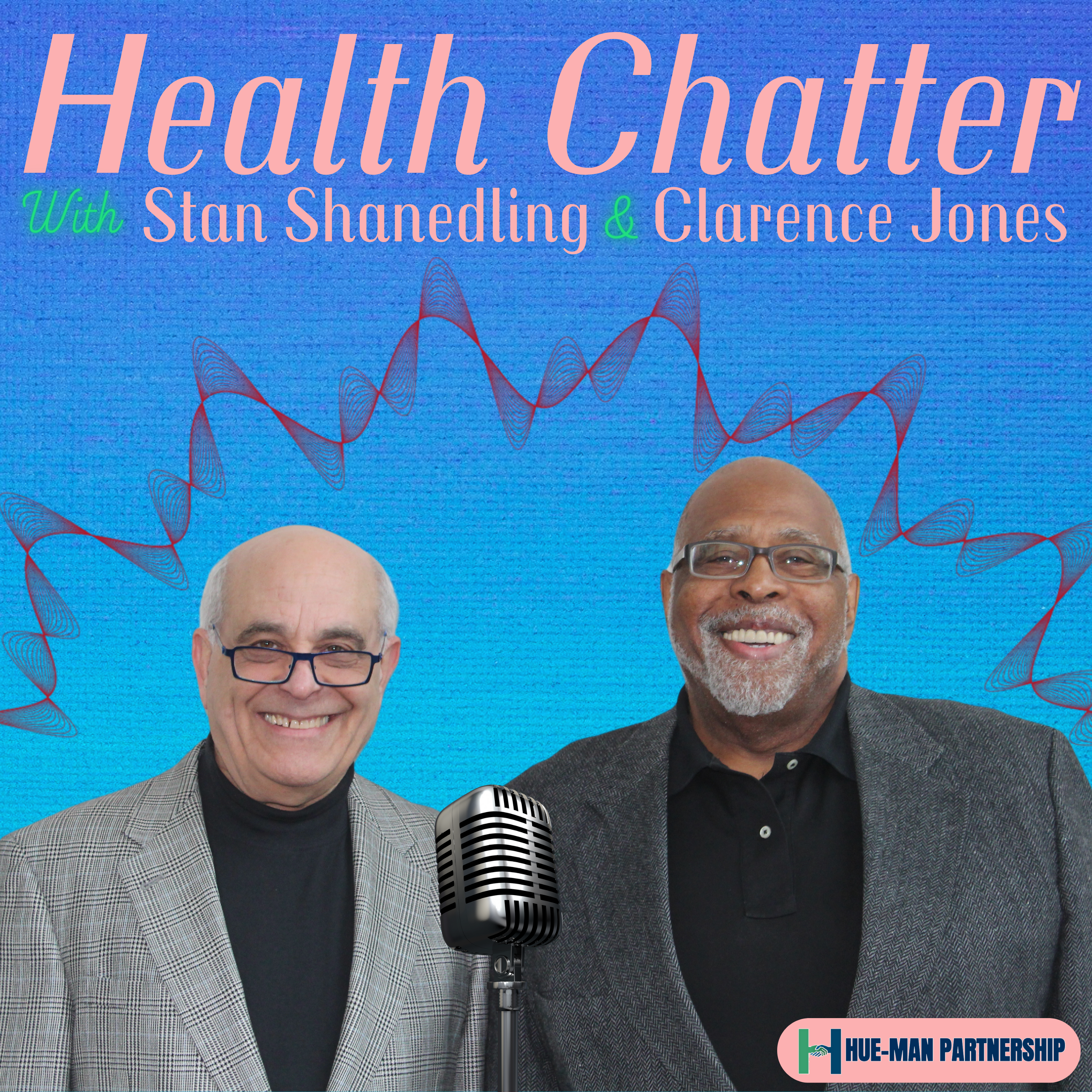


Stan, Clarence, Barry, and the Health Chatter team chat with Andrew Litchy, N.D., about naturopathic medicine and its role in modern healthcare.
Dr. Litchy is a naturopathic doctor who treats people of all ages, focusing on digestive and cardiovascular health, chronic illnesses, and overall wellness. He is also a faculty member, meditation teacher, and collaborator with research programs aimed at integrating naturopathic approaches and mindfulness practices into broader healthcare solutions.
Join us for an enlightening discussion about the principles and applications of naturopathic medicine, and stay tuned to gain fresh perspectives on holistic health.
Join the conversation at healthchatterpodcast.com
Brought to you in support of Hue-MAN, who is Creating Healthy Communities through Innovative Partnerships.
More about their work can be found at huemanpartnership.org.
Quick Facts
- National survey data show that 0.2 percent of U.S. adults used naturopathy in 2002 and 1.3 percent used it in 2022.
- A central tenet of naturopathic philosophy is vis medicatrix naturae (the healing power of nature), an ancient concept often ascribed to Hippocrates
- Some swear by the benefits of naturopathy but
What is Naturopathy?
- Naturopathy is a distinct type of primary care medicine that blends age-old healing traditions with scientific advances and current research.
- Naturopathy is not a replacement for conventional medical care but can complement traditional treatments and therapies to help achieve optimal health, example: adjunctive oncology
- Naturopathic treatments often focus on the condition’s root cause rather than treating the symptoms.
- Naturopathy is guided by a unique set of principles that recognize the body's innate healing capacity, emphasize disease prevention, and encourage individual responsibility to obtain optimal health.
- Naturopathic treatment modalities may include diet and clinical nutrition, behavioral change, lifestyle modification, hydrotherapy, homeopathy, botanical medicine, physical medicine, pharmaceuticals, and minor surgery.
How do patients benefit from naturopathy vs traditional medicine?
- Individualized and Tailored treatment → Naturopathic medicine is a holistic approach to healthcare that focuses on individualized treatment plans, meaning treatments are tailored to each patient’s needs, allowing them to focus on their specific health concerns. This individualized approach ensures patients receive the most effective and appropriate natural therapies, which is especially useful in patients with chronic disease.
- Medication Management → While medication can help treat certain conditions, there are times when patients can benefit from a more holistic approach such as lifestyle modifications or a different medication that has less side effects. Naturopathic medicine can prevent drug interactions and help reduce medication use, which is especially beneficial for those who want to avoid the side effects of certain medications.
- Emphasis on Prevention → Naturopathic medicine is a great way to prevent diseases. It focuses on lifestyle changes, such as healthy eating, exercise, and natural remedies to support the body and its overall health. Naturopathic medicine also seeks to identify and address the underlying cause of a health issue rather than just treating the symptoms, which can help prevent the disease from reoccurring.
3 types of practitioners:
- Naturopathic physicians - generally complete a 4-year, graduate-level program at one of the North American naturopathic medical schools accredited by the Council on Naturopathic Medical Education, an organization recognized for accreditation purposes by the U.S. Department of Education. Some U.S. states and territories have licensing requirements for naturopathic physicians; others don’t. In those jurisdictions that have licensing requirements, naturopathic physicians must graduate from a 4-year naturopathic medical college and pass an examination to receive a license. They must also fulfill annual continuing education requirements.
- Traditional naturopaths - also known simply as “naturopaths,” may receive training in a variety of ways. Training programs vary in length and content and are not accredited by organizations recognized for accreditation purposes by the U.S. Department of Education. Traditional naturopaths are often not eligible for licensing.
- Other health care providers - (such as physicians, osteopathic physicians, chiropractors, dentists, and nurses) sometimes offer naturopathic treatments, functional medicine, and other holistic therapies, having pursued additional training in these areas. Training programs vary.
Downsides of naturopathy:
- Insurance coverage is limited – Although naturopathic care is often more affordable than conventional medical treatments, insurance coverage can vary greatly depending on where you live, as well as your health plan.
- Time Consuming And Requires Commitment – One of the biggest challenges with naturopathic care is that it usually requires a fair amount of time and commitment in order to see results because the treatment plan might include different components, such as diet modifications, herbs and supplements, lifestyle changes, acupuncture appointments, or even surgical procedures. It’s important to understand that naturopathic care is typically a long-term commitment, not something that will cure an illness overnight.
- Limited Research And Clinical Studies To Support Claims – While many people swear by the effectiveness of naturopathic medicine, there is still a lot that we don’t know about it in terms of solid clinical data. For example, research has been limited when it comes to evaluating the safety and efficacy of different methods and protocols used by naturopaths. Some medical professionals have gone as far as calling this type of medicine unethical due to the lack of modern day evidence base for some practices such as homeopathy.
- Homeopathic Immunizations - Certain homeopathic products (called “nosodes” or “homeopathic immunizations”) have been promoted by some as substitutes for conventional immunizations, but the U.S. Centers for Disease Control and Prevention says there’s no credible scientific evidence to support such claims. When families opt for “homeopathic immunizations” they are risking their child and their community’s safety.
- A 2015 comprehensive assessment of evidence by the Australian government’s National Health and Medical Research Council concluded that there is no reliable evidence that homeopathy is effective for any health condition
- Disclaimer: Many practices that naturopathy recommends may be supported by data such as lifestyle modifications and tissue manipulation for pain relief but some are not supported by data.
Safety Notes
- Regulations, licenses, or certificates do not guarantee safe, effective treatment from any health care provider—conventional or complementary.
- Tell all your health care providers about any complementary or integrative health approaches you use. Give them a full picture of what you do to manage your health. This will help ensure coordinated and safe care.
Sources
https://www.nccih.nih.gov/health/naturopathy
https://pmc.ncbi.nlm.nih.gov/articles/PMC6399603/
A link to the MNANP, the MN professional organization:
A link for the AANP, the national organization:
Journal of Dietary Supplements, 8(4):369–377, 2011 byInformaHealthcareUSA,Inc. Available online at www.informahealthcare.com/jds DOI: 10.3109/19390211.2011.623148
Naturopathic Physicians: Holistic Primary Care and Integrative Medicine Specialists
Health Chatter Podcast - Naturopathic Medicine Episode
Stanton Shanedling: Hello, everybody! Welcome to Health Chatter. And today's show is on naturopathic medicine, which is a really interesting twist given all the different shows that we've had. And now we're going to talk about it from a naturopathic medicine point of view. We have a great guest with us. I'll get to him in just a moment.
As you probably know, we have a great crew that makes our shows very successful: Maddie Levine-Wolf, Aaron Collins, Deandra Howard—our researchers—Matthew Campbell, production, marketing and research, Sheridan Nygaard, our medical advisor Dr. Barry Baines, on the show today, and also my partner in crime on this show, co-host Clarence Jones. Thank you to all of you. Again, I've said this many, many times: you're second to none and wonderful colleagues.
Human Partnership is our sponsor for our shows. It's a great community health organization that Clarence has certainly been involved with for many, many years and helps us get these shows out to you, the listening audience. You can check them out at humanpartnership.org, and our show is healthchatterpodcast.com where you can see all of the research that we do for these shows. And you can also put in questions that you might have, and we certainly can get back to you. So thank you all for listening in to today's show.
Today we have Dr. Drew Litchy, who's a naturopathic physician. He's a graduate of the National College of Natural Medicine in Portland, Oregon. I believe there's just a couple of these in the country, which you'll probably talk to us about. People of all ages utilize modern biomedical research and time-tested naturopathic approaches at his clinic here in Minnesota. He's graduate faculty at the University of Minnesota, adjunct faculty at the National University of Natural Medicine. He does a lot of things with his family, which I'm sure he'll talk about a little bit.
But it's great having you. We've talked about a lot of health-related issues on Health Chatter, and to be quite blunt, we've never come at it from this angle. And so it's really good having you. Thanks for being with us, Drew. It's really a pleasure. So all right, let me get the ball rolling here. Naturopathic medicine—why don't you just start out with a good definition of it for our listening audience?
Dr. Andrew Litchy: Well, sure. A naturopathic physician, naturopathic doctor, is someone trained in both conventional medicine as well as naturopathic or alternative modalities. And so we're a mid or physician-level provider, depending on the state, that really has one foot in both worlds of alternative, complementary, and conventional treatment. We have a pretty broad type of practice. We may find ourselves, depending on the state, acting as primary care providers doing medication management, taking care of things that you see in a primary care setting. And also we act as adjunctive specialists or specialists in more serious and chronic conditions where we complement conventional treatment and conventional approaches.
Stanton Shanedling: So, you know, on the front end when we were introducing everybody, I was thinking, all right, how many actual schools are there in this arena?
Dr. Andrew Litchy: Right, not many. There's one in Canada and I believe there's five in the U.S. right now. So not too many. We have one in Chicago, Oregon, Washington, and then on the East Coast and Arizona, and then up in Canada.
Stanton Shanedling: All right. So how is it—you know, because I know your father who's a neurologist—and so I'm curious how it is you got involved.
Dr. Andrew Litchy: Yeah, I think the short answer is I worked in the ER too long. That's what it comes down to. During my pre-med, I was a technician at Regions Level One Trauma Center. And so at Regions, technicians are in everything. So we're in the traumas all the way to, you know, stocking, pushing people around, getting in places. So we saw—it's a biased cross-section of healthcare—but I saw a lot of things. And over the four years I was there, I found myself less enthralled and excited by the medical stabilization and surgery and the blood, the things that we do really well in the ER. We did those very well, and became more interested in the things that we don't do well there, which is chronic disease management, patient care, and really more longer-term healthcare approaches.
And as I was there, I was looking at my career because I was going to be a medical doctor. I was considering what kind of things would I be doing in my career, and I realized a lot of my passions, which were exercise, meditation, nutrition, and so on, were not going to be part of my scope. It was going to be—it could be quite interesting, but I would be doing mostly diagnosis and medication management, probably unless I went into surgery. And so that, while really important, became less and less interesting to me personally over those four years. And I was thinking, well, maybe a psychiatrist, maybe I'll be a DO, and so on.
And really the last semester before I had to apply for med school, I discovered there was such a thing as naturopathic medicine. And knowing that it was a really good fit because all those things—mind-body care, nutrition, taking care of oneself, lifestyle—were incorporated with a physician-level training and level of thinking. So that's how I found myself here, just in time.
Stanton Shanedling: Just in time, right, right. So all right, another thing—and Barry, you can chime in here too—but another thing, why don't more or less people know about you guys?
Dr. Andrew Litchy: Well, we're in Minnesota, I think, is what it comes down to. I mean, on the coasts we're everywhere. So when I went to school in Portland, everyone had their naturopathic doctor. Like most people had someone they were working with. I think of it a little like chiropractic was here for a while. There were many years where chiropractors were in Minnesota, people really didn't know quite what they did. They just knew about them, they were around and not fully integrated.
And so I think now in Minnesota, we're starting to get more NDs in state. When I moved here there were five in practice, and now we're 50, 60, 70. So it's increasing. And there's just more time for education for people to understand what we do and what we don't do and who we are and who we are not, because there can be a lot of ideas of what we are that are not quite right.
Stanton Shanedling: Yeah, yeah. Do a lot of people take advantage of you guys in your practice? Like, how would I—if I didn't know anything but I was kind of interested in getting involved or getting some care by someone—how would I even connect?
Dr. Andrew Litchy: Sure. Well, people find me lots of ways—through website referrals and so on. My website, we try to do a fair amount of education so people can understand what we do. And I think a lot of people still find us by word of mouth. More and more, I think we get referrals from other healthcare providers. And as people understand what we do more and more, there's more and more interest in it.
Stanton Shanedling: Yeah, yeah. Barry, go ahead!
Barry: Yeah, there are a lot of areas to go down. I'm just curious because I remember that with chiropractic, one of the big things that allowed more access to that is health insurance. And that always seems to be a conundrum. I don't want to say, you know, money talks, nobody walks, but the reality is that if there isn't insurance coverage, it's going to be harder to access. And also, Stan, I would say it's that it's oftentimes raving fans of naturopathic physicians is how, like you say, word of mouth is where that goes. But I'm just wondering what the climate is in Minnesota for insurance coverage?
Dr. Andrew Litchy: Yeah, I don't think there's any particular movement by insurance companies to credential NDs. I think there's no signaling they're interested in doing that, which is, as you said, a shame because it prevents access for providers. We develop practices that don't take insurance and so we can provide care, but it's such a limitation for people to access what we do. In other states, we are credentialed in insurance systems, and so we are in hospitals. I did training in hospitals side by side with MDs. And so Minnesota—yeah, I think we will probably get there.
And frankly, it confuses me why insurance would not have us involved because we're not expensive, you know. We don't recommend $30,000 treatments, and we prevent utilization of the healthcare system. So you think insurance of all people would really appreciate that benefit. But we're not there yet.
Stanton Shanedling: So when do people usually come to you for care? If they've got a problem, or do they come to you knowing that they just want to prevent problems?
Dr. Andrew Litchy: The majority of people that come to me come to me because they have a problem. But there are some people that do because they understand prevention can happen before problems arise, right? And so they want to optimize their health, optimize their functioning and work like that. It's still a minority, but it's a really fun patient population to work with. We're working with peak performance and athletics—that's another wellness population that's a lot of fun to work with.
Stanton Shanedling: So when they come to you, is it because they're frustrated with the care that they might be getting on the other side of the equation here? Or is it that they want to shy away from using prescription medications and they want to try to be more natural? How is it that they present themselves and for what particular reasons?
Dr. Andrew Litchy: Yeah, I think those are two groups of people that would find me. Those that are suspicious, have lack of trust in a conventional system for a variety of reasons, looking for care outside that. Those that are concerned with the nature of some conventional treatments—they want to find alternatives for what they might see as problematic or a treatment with a lot of side effects. And there are also people that seek us out for adjunctive or specialty care that they simply can't get in a conventional system. So those are the many types of people that find us.
Stanton Shanedling: Clarence?
Clarence Jones: Yeah, that's Dr. Drew. How are you? Great. I'm finally here. But this is really kind of, as Stan said a little bit earlier, we have never talked much about this. But I was wondering demographically, you know, talk to me about the demographic of people that would probably use your services. Because I'm an old guy, okay? So I'm wondering if there is a demographic that would be more inclined to utilize your services. So let's leave it like that.
Dr. Andrew Litchy: Yeah. Well, I see people of all ages, anyone from, you know, six months all the way through later stages of life. I would say most of our patients are middle-aged and like that because this is when chronic illness starts to arise and people have maybe the time to even think about taking care of themselves like that. But no, I personally work with a lot of kids. I work with people in later stages of life as well.
Stanton Shanedling: So naturopathic medicine, your treatments—if I'm reading right here from our research—really focus on root causes. It's just like, where is this condition coming from? Help me out here. Is it root causes? So you kind of dig deeper in order to get to your treatment? Or how is it that you engage with somebody's health in order to help them?
Dr. Andrew Litchy: Right. You know, case analysis and treatment is really what I think separates us from other types of providers—how we think about problems. I mean, people do think about root cause or the whole person that are not naturopathic doctors, but that's really what we focus on. So a couple things there: when there's a symptom, we always try to ask the question, why is that happening? And then going to the why, and then going deeper and deeper with that. That's one aspect.
And then we're thinking about different influences on health—external environment, lifestyle, things you do, eat, take care of yourself, genetics—and how all this interacts. And so when you view illness or symptoms as part of a larger process and trying to understand the things that cause that process to be happening, you have a lot more treatment options than simply addressing the presenting signs and symptoms. And so that's what we mean when trying to get to the root cause: how can we work with the deeper influences of health, the deeper risk factors, or the things that are driving it?
So something like diabetes, right? You have your hemoglobin A1c number, and then you might just prescribe a medication and watch how that goes down, and then your treatment is done. The hemoglobin A1c is controlled, and that's great, and that's true. That will control a lot of the problems with diabetes. But then there's looking deeper: why is that off to begin with? And that frequently is lifestyle, food choice, activity level, other health conditions can be driving that. And so we tend to think about these things as much or more than just getting that number down however you can.
Stanton Shanedling: Barry?
Barry: Yeah, so when I think of naturopathic medicine, I really think of it mostly in terms of a real emphasis on prevention with a lot of the things that you've talked about—diet, exercise, meditation, again getting to the root cause. And in my past—and I really don't like the word alternative medicine because it sort of is like pitting one thing against another. I actually like integrative medicine or complementary, but I think integrative is a stronger word because, you know, as a family physician, you're still acute care oriented. There's a symptom, let's get that better. You address these other issues like exercise and nutrition, things like that. But most of the expertise in regular Western medicine doesn't have that focus. I mean, as family physicians we know something about that, but we generally don't have that time when we're working with patients to really get into those kinds of things.
Because, and I know that I think you've mentioned this, is that it takes time with these things. You're not going to see results from today to tomorrow with a number of—and it's not just naturopathic interventions because it's basic health interventions. And that actually has a greater impact on illness and morbidity or mortality in the long term, but it's not sexy as much as getting a $30,000 surgery or some kind of new medicine and treatment.
And so I guess my probing question here is, what are some good ways for getting more of that integration approach in our current community? Because you are based here in Minnesota. It sounds like the corps of naturopathic physicians has been growing, and it sounds like you have some connections into that idea of getting people to think about this as an integrative approach that could enhance the outcomes that we get. So that's a little loosey-goosey there in terms of my question, but I think you gather the gist. And I'm thinking in terms of our listening audience for how to sort of measure this and think about how it might be helpful, you know, to me or to Clarence or to Stan—especially Stan, because he's going to be taking a trip somewhere in the jungle and hopefully they'll make it through there okay.
Dr. Andrew Litchy: Yeah. Integration and communication between providers is always a challenge, even when you're working in the same healthcare system. And for us, since we're not in the hospitals, not in the clinics, communication is even more difficult. But we try and we do. And, you know, I frequently talk to other people's providers, their specialists, about things. So we do sometimes coordinate care. But I think care coordination is a challenge wherever you are, whatever kind of provider.
I think of us for people—how do we fit into healthcare? It's a couple of ways. One, we can be thought of as another specialist on their team, and in that way we have—hate to say it—but our box of things we work well with, and that is different than what the other specialists do. So we're not in opposition, but we don't do the same thing, and we work together. So when I work with people with cancer, I don't give input on their conventional care, and we work with it to help it go as well as possible. So that's a place we integrate.
Another place people will be here is in place of conventional primary care. Initially, I always encourage people they need to have their PCP, their relationship with them. But as you said, implementing lifestyle is challenging, and it takes time, and it's not as simple as saying, "Oh, if only I ate better, I will." You know, there's—yeah, even with quitting smoking, everyone who smokes these days knows they should quit every time they have a cigarette, right? But they still continue to do that. And so making lifestyle change requires a relationship. It requires helping the understanding of the secondary benefits people get from it and really coaching and support to learn to make these changes. So that takes time.
And I, by the way, I find that fascinating. Helping people make change is really an interesting part of what I do. And so I feel fortunate we have time. I take an hour for patient visits, and it can require that time over months to really get to help them make the changes they need to.
Clarence Jones: Dr. Drew, hang in here with me, okay? I was really wondering because I'm from a time where, you know, you start talking about herbs and roots and things like that, people kind of back up. How do you talk to people and help them to understand the work and the importance of the integrative medicine, those kinds of things? How do you help them to do that? Because I think some folk that I know, once you mention roots, they're like, you know—so help me with that conversation.
Dr. Andrew Litchy: Well, yeah, so that's a matter of education partially. I mean, you know, we've been using botanical medicine long before we had antibiotics. So there's a huge history of historical use, maybe the entire human history of using plants and natural methods to heal us, right? And so that's one—it's not new. It's actually, we know how to do that very well when you have the traditional knowledge of it.
And two, I think related, there's a concern of research and clinical guidelines for utilizing these things. And I think that in many ways is a bit of a stereotype about what kind of research we have around our plants and how we use them. We have a lot of basic science information around the herbs we use and a growing body of knowledge of how to use them. Whole systems research or whole person's research is new, though. It's only in the last 10, 20 years we've had the math to start working with multiple variables in healthcare. And even that, we're not great at it yet. So sure, we have outcome-based research, but to really look at the power of something like Chinese medicine or naturopathic medicine, we just don't have the tools quite developed to really answer some of those questions. So that is a limitation. But I think, yeah, these are things we've used for a long time. We know a lot about how to use them, and we're catching up and really going to town on research on it as we speak.
Clarence Jones: Thank you. Yeah, thank you.
Stanton Shanedling: So why isn't this part of medical education?
Dr. Andrew Litchy: I don't know. I don't know. It's a great question. Why is there only a small semester course on nutrition in medical school? I don't know. I think there's some nice stories about that. I mean, I think the conventional idea that nutrition doesn't matter is beautiful. I mean, the idea that the body is so powerful you can put whatever you want into it and it's going to be able to do what it needs to do with that—I love that. I wish it was true. But yeah, I don't know.
Stanton Shanedling: So all right, so here's the other question I have. So, you know, linking with pharmacists. We talked about linking with primary care providers to start with. What about pharmacists? Do you link with them and communicate with them as well?
Dr. Andrew Litchy: Actually, no, I haven't spoken with pharmacists much. Pharmacists can interact with us. They often will do the medication or interaction checking for patients, or some pharmacists will really help their patient understand how a supplement or medication might be reacting if they have that. So that's how we interact. But not a lot of direct interaction with pharmacists, at least me personally.
Stanton Shanedling: So all right, so, you know, you walk into—I'll use myself as an illustration—you walk into a pharmacy, could even be in a grocery store, right? And you see huge counters of vitamins. Okay, so help me out here. Is that part of your scheme, the vitamin supplementation, all these different kinds of vitamins? Or, you know, it's kind of this juxtaposition—okay, I'm going up to the counter to get a prescription medication, and then right behind me is this huge counter or display of vitamins. So there's kind of that, shall I call it, a little bit of a disconnect. So tell me where you might fit in there.
Dr. Andrew Litchy: Yeah, there's actually a lot to talk about with the supplement issue. We are trained in use of vitamins, herbs, and supplementation. And so most of us, not all of us, are experts in brands, utilization, and prescription of these. And that's a common tool we use. And yeah, and also the supplement industry is a bit of a Wild West, which is good and bad, because they're not regulated. You have a variety of products on the market, and a consumer really doesn't frequently have the education needed to understand why something costs $20 versus $80, why would that be helpful or not. And so most of the things you see in the drugstore are lower quality, lower cost supplementation that may be useless, mislabeled, or be okay. But it's hard to parse that out.
Clarence Jones: Okay, Dr. Drew, I'm going to ask you this: what are the most common health issues that people come to you for?
Dr. Andrew Litchy: Oh, for me, I work with—I would say a lot of—you know, we all have different specialties. So I tend to see common things in a primary care setting: cardiovascular risk, a lot of digestive issues—that's very common. I personally specialize in adjunctive cancer care, complex chronic illness, and special needs pediatrics. That's where I tend to practice.
Clarence Jones: But with the naturopathic medicines, I mean, what do people usually use that alternative medicine for, those kinds of things?
Dr. Andrew Litchy: Oh, yeah, lots of things people can use it for. Instead of taking a statin, you might have—for statin-intolerant people, there are other replacements, ways of working with diet, lifestyle, supplementation. That's a common place. I think functional digestive issues are a huge area where we can provide a lot of relief for people, and that's often a big gap in conventional care—working with functional health issues. You know, IBS—people can be debilitated, unable to leave the house, and often people just don't have enough training to actually help with them, or "drink more water, eat more fiber," and like that.
So functional health conditions are a huge place we help people. And like I said, adjunct care for autoimmunity, cancer care, serious conditions as well.
Clarence Jones: So when you were saying that, you know, the first thing that popped in my head is this whole issue around gut health. I mean, you know, I'm not a doctor, so I have to talk graphically, okay?
Dr. Andrew Litchy: That'd be good.
Clarence Jones: Okay, so does the medicine that you use, does it help us with those kinds of things—the bacterials, I mean, those kinds of things? Is that part of it?
Dr. Andrew Litchy: Yeah, absolutely. Absolutely. Yeah. Yep. And yeah, it matters so much. You know, your gut's just a huge immune-active mucosal tissue, right? And inflammation there affects everything greatly. So at the very least, that's really important for systemic health. And like I said, people with IBS or certain heartburn conditions—it's not really a Prilosec deficiency. It can be a bacterial imbalance, it can be food reaction, it can be a number of mechanical issues or a lot of possibilities what that is.
Clarence Jones: I noticed that when I would take a look at some of the research, I mean, you spend a lot of time with your patients. I mean, you know, an hour or two with the patient. I'm like, wow, you know, that's kind of interesting and exciting to know because most of us only get 15 minutes, maybe.
Dr. Andrew Litchy: Right, right.
Stanton Shanedling: Barry, go ahead!
Barry: Now, you know, one of the things that I learned from the first family physician I worked with in office after my residency—he kept, you know, I wouldn't say having to pound it into me because I got it, but he said, "The better the relationship you have with your patients, the better the outcome." And the reality is that it's hard to, on a long-term basis—I mean, I guess long term you can, but with the shorter visits, it's really difficult to get into those kinds of things. And so, if I may say, Drew, that I'm a little envious that you get to spend that amount of time with patients. But clearly, this idea that you really get to know who they are as people and sort of—you said that you really like to see that change, and it's clear that by spending that time you get to understand them a lot better. And then you're going to be able to come up with solutions that sort of fit who the person is, because everybody is individual.
And, you know, so it seems that that's a high leverage point on the one hand, and it's also a two-way commitment that, you know, the patients and the people that you work with have to be willing to be in the long term, because again, the change tends not to be from today to tomorrow. It might be from this year to the next year. And so I'm just wondering if, again, not to give away your secrets here as a naturopathic physician, but are there some of the high points of things that you've learned working with patients in a naturopathic medicine setting that can be generalized to the population if people were to be more mindful of those things and maybe be thinking about that? Because you just don't get that chance to have that conversation in a 15-minute office visit, even with their primary care physician. So I'm wondering if you could just speak a little bit to that.
Dr. Andrew Litchy: Yeah, yeah, absolutely. I think that's a really important point. One of the things I like about naturopathic medicine is really acknowledging the humanity of the provider and the humanity of the patient. And we really canonize and talk about that relationship. You know, "Docere"—doctor is teacher, right? Doesn't "docere" mean teacher in Latin? And that is the foundation of the relationship. It's mutuality, right? Not so hierarchical. When you have very little time and you have to just kind of convey—frequently you have to convey the information, make sure they understand, and that's what you got.
And when you have time, you can enter in relationship, you can skillfully and well and nicely push back or point out where people are not doing the right thing. And because of the relationship and the shared space of you two as people in the room, people can make change and go past things that were holding them back from making those changes. And I think maybe specifically to your question, that therapeutic relationship in that moment between two people is so important for providers and people to heal. And that's something I wish everyone had time to cultivate and training to cultivate, because how you hold yourself as a provider in that moment takes some practice, some skill, some coaching about how it is best for you to be. How can you be yourself truly and, you know, the right kind of person and right kind of provider?
Stanton Shanedling: You know, it's interesting. We just did one of our—we're doing three shows on health insurance, and we did our first show, and we were talking about the issue of trust. You know, when people are choosing health plans and health insurance, etc. And what we're talking about here in many ways is a really good trusted relationship, and that really helps overall in the delivery of care. You know, our listening audience can't see you, Drew, but all I can tell the listening audience is, if I wouldn't mind going to see Drew, because, you know, when you just look at him you can say, "God, you know, you could trust this guy." So then there's part of it that comes through loud and strong just by seeing you. Go ahead, Clarence.
Clarence Jones: Yeah, I have this question. I mean, it just came to me, is this chemical versus natural healing time? You know, when people come to you and—I mean, because you're in both realms—is there a benefit in natural healing time versus just a chemical healing time? If I'm making sense, you know, some people want quick results. Other people need a longer-term effect. So anyways, go ahead.
Dr. Andrew Litchy: A couple things with that. I always say I'm medication agnostic, by what I mean there is a time for medication when it's the most elegant decision for the patient and the healthcare condition, you know. And sometimes really high-intensity interventions are most elegant. Sometimes it's best to just do the surgery or whatever. So it depends on the person.
And sometimes it is best to work with something with potentially fewer side effects or can work more gently, and that's a discussion with the patient. Most people that come to see me would prefer not to do the medication—that's why they're there—or are interested in doing something else besides that. But frequently, I tell them it's best to just do the medication, you know.
And with both of these, I think thinking about the duration of treatment and the outcome of treatment is important too. So if you're going to do any intervention, when does it end and why? And what is it trying to change in the system so you no longer need it? And that kind of thinking applies to medication as well as herbs, as well as diet.
Stanton Shanedling: Well, let me ask you, so, you know, for healthcare practitioners, they're licensed, right? Are you licensed? And if there's any problems, is there a board, for instance, like they have for physicians?
Dr. Andrew Litchy: Yeah, great question. We are registered, and we are registered with the Minnesota Board of Medical Practice. Registration is very much like licensure, except it is not. And so with licensure, you have your own guiding board and so on. And in Minnesota, we're developing that infrastructure to potentially move towards licensure. In most other states, we have licensure. At the state level in healthcare, scope is determined at the state level, so it's not a federal regulation. It's a state—each state will choose scope and regulation of their providers.
Stanton Shanedling: So another question that came to mind is, you know, you go see your primary care physician these days and everything is data-related. It's like, "Okay, let's get you into the system here, let's get you into Epic, and let's get everything down. Get all your test results," etc. So how is it, or maybe you don't, but how is it that you utilize data in order to drive care?
Dr. Andrew Litchy: Well, we use electronic medical records. I love looking at lab tests and history of things. And so we—yep, as much history as we can get is really important for patient care. And we certainly utilize research and evidence-based practice when appropriate. And so we're thinking about those things as well.
Stanton Shanedling: The other thing—and we've talked about this on Health Chatter with other professionals—so do you link with, for instance, like community health workers in order to help deliver the type of care that you promote?
Dr. Andrew Litchy: Yeah, I would say not regularly. We're in private practice, and so we certainly refer to community services and so on. But I'm not a Medicaid provider, and so my connection to those systems is peripheral at best.
Stanton Shanedling: Then the other one that came up, and you wrote me a note—okay, let's help our listening audience because there's a lot of terminology that's floating around here. Okay, so we have naturopathy and we have homeopathy. Okay, so help us out here.
Dr. Andrew Litchy: They are not the same thing. All those "-pathies" are specialties, right? So homeopathy is kind of a distinct system of healthcare developed by a fellow named Hahnemann in the 1800s, and it works with very, very low-dose botanicals and substances, and it's kind of an energetic, kind of weird mechanistic medication system. Some MDs will use homeopathy as a treatment. It's a modality just like Chinese medicine. But it is not identical. Not all naturopathic doctors use homeopathy at all, and it's even a little controversial these days because of the lack of mechanism with it. And so not the same thing, although I have—my favorite homeopath is a medical doctor, and I refer to him for that. So it's, yeah.
Stanton Shanedling: Gotcha, gotcha. Clarence, I want to ask you this question.
Clarence Jones: Yeah, and I won't be able to complete this sentence, but you've got to help me, Dr. Drew, okay? Sure. Naturopathic medicine is a preventative...
Dr. Andrew Litchy: Yeah.
Clarence Jones: Okay. Can you now explain that to me, please?
Dr. Andrew Litchy: Yeah. So one type of preventive medicine is early detection, right? And that's not what we're talking about. With early detection, we're talking about identifying risk factors and treating the risk factors so that will ideally prevent something from arising in the future. So yeah, that's what we mean by prevention—trying to get to the risks before it becomes a true disease entity.
Clarence Jones: Okay, great. Thank you.
Stanton Shanedling: This has been really enlightening. I mean, I hope our listening audience realizes that this is an avenue that's worth exploring, and you can work it through in collaboration with your primary care provider. So let me ask you, if people want to connect with your practice in the State of Minnesota, they can go to your website, right?
Dr. Andrew Litchy: Yep.
Stanton Shanedling: Okay, and that's what?
Dr. Andrew Litchy: Neighborhoodnaturopathic.com. My clinic is Neighborhood Naturopathic.
Stanton Shanedling: How do they—all right, now for our listening audience that's in other states around the country, where do they start?
Dr. Andrew Litchy: Yeah, so most states will have an association of naturopathic physicians, and starting at your state association is the best place to go. And that way you'll know what kind of provider you're finding. I think we wrote about this a little bit—naturopath is not a protected title in many, many places. And so you have a variety of providers that might use that handle, and so it can be simply confusing who's who. By going to the state association of naturopathic physicians or doctors, then they'll have a "find a doctor" search option, and you'll see who the registered or licensed naturopathic doctors are in your state.
Stanton Shanedling: Okay. If there's any further information that you think would be really useful for our listening audience, we can get that in on our website. So share that with me, and we'll get that out to them as part of this show.
Dr. Andrew Litchy: Absolutely.
Stanton Shanedling: Last comments, Drew. What do you—you know, if you have that torch in your hand, what do you want to say?
Dr. Andrew Litchy: Oh, yeah. Well, I think right now it's important that people understand what we do. At least in Minnesota, that's the big challenge right now. I think there's a lot of just a lack of education, precisely what we do, what our training and approaches are, and that kind of differentiates us from other alternative providers. So I think that's the main thing to get out there—who we are, our scope, how we practice, and how we think, and how we fit in with conventional as well as alternative care.
Stanton Shanedling: And hopefully Health Chatter helps with that. Go ahead.
Clarence Jones: I was going to say that your last comment was really what I was going to say. Thank you for putting up with our questions. I mean, because at least from my side, I had no idea about really what we were going to, and you probably could tell by the questions that I asked—I'm not writing about anybody else—but it's very important for us to really understand what are the resources that are available to us, you know, how do we utilize them, you know what I mean? And so many times, the naturopathic—that's just not part of my common conversation, you know. And so really good for me to be able to have some kind of definition to that. And I think that you've done a phenomenal job. Thank you. Very personable, very insightful conversation, and I do appreciate this. And at least I can now enter into the conversation. So thank you for that.
Dr. Andrew Litchy: Oh, my pleasure! And these are great questions. These are things that people are thinking and don't know, so it's perfect, right?
Stanton Shanedling: Barry, last thought.
Barry: Just, I think that our Health Chatter audience is going to really benefit from learning more about a healthcare resource that really, again, gets at the root of a lot of our health problems as we've talked about. And really the focus on prevention and really leveraging the relationship. Again, I think it's how do people get more knowledge and understand how to access naturopathic medicine, naturopathic physicians, as an option for their healthcare and for their healthcare improvement. So Drew, I say it was great to meet you in person, and I just really appreciate your being on the program today.
Dr. Andrew Litchy: Thank you.
Stanton Shanedling: So, you know, I underscore what Barry is saying. I think, you know, maybe one of the key takeaways here is that, hey, here's an option. Here's an option that we should all be aware of. And hopefully Health Chatter will help to get the word out. As things become more sophisticated in the field, feel free to contact us. We'll get you back on the show to talk about new things that are coming up in the naturopathic field. So, Dr. Litchy, thank you so much for being on Health Chatter.
For our listening audience, our next show coming up, interestingly enough, is secure firearm storage, which, you know, when we think about all the things that are going on around firearm safety and all the deaths that we're seeing, we're really going to look at that as a major health issue. So that'll be coming up as our next show. So for everybody out in the listening world, keep health chatting away.


