Longevity
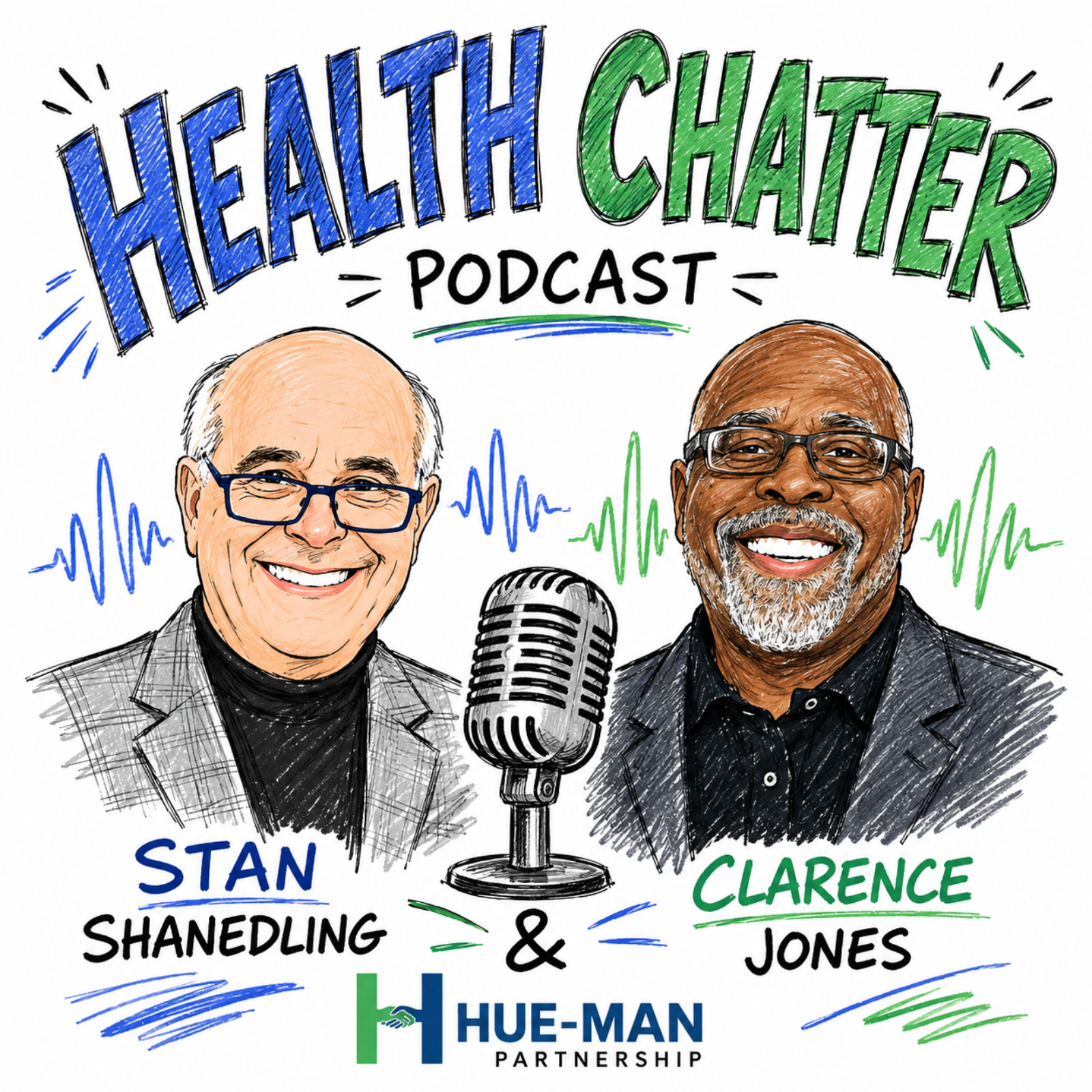


Stan, Clarence, Barry, and the Health Chatter team have a cross-generational discussion on longevity and what it means to live a longer, healthier life.
Join the conversation at healthchatterpodcast.com
Brought to you in support of Hue-MAN, who is Creating Healthy Communities through Innovative Partnerships.
More about their work can be found at https://www.huemanpartnershipalliance.org/
Research
Lifespan vs. Healthspan
-
Lifespan: The total number of years an individual lives (from birth to death). Think ‘biologic age’.
-
Healthspan: The number of years an individual lives in good health, free from chronic illnesses, severe disabilities, or cognitive decline. The ultimate goal of modern longevity science is to align healthspan as closely as possible with lifespan.
The Shifting Math: Genes vs. Lifestyle
For years, the scientific consensus (frequently cited in health reporting) was that genetics played a relatively minor role in average longevity—accounting for only about 10 to 25 percent of the variation in how long people live. The rest was attributed to environment, socioeconomic factors, and personal choices.
However, recent landmark research (such as a major 2026 study from the Weizmann Institute of Science published in Science) has reframed this debate. By using mathematical models to filter out "extrinsic mortality"—deaths from accidents, infections, and external hazards—scientists isolated the data to look strictly at intrinsic biological aging.
-
The New Consensus: When looking purely at biological aging, genetics may actually account for roughly 50% to 55% of the variation in human lifespan. * The Nuance: Genetics seem to matter much more the older you get. While lifestyle choices largely dictate whether you make it to your 70s or 80s, exceptional longevity (living to 100 or beyond) is highly correlated with specific, protective genetic profiles.
Overview of ‘Lifespan’ research:
Cellular Reprogramming & Epigenetic “Polishing”
Instead of viewing aging as permanent DNA damage, scientists now view it more like "scratches on a CD"—the original youthful data is still there, it’s just being misread due to chemical changes (epigenetics).
The Yamanaka Factors: Researchers are using modified Yamanaka genes (proteins that can revert mature cells back into stem cells) to partial-reprogram tissue. In early 2026, Harvard geneticist David Sinclair announced that the FDA approved the first human trials for epigenetic reprogramming therapy, initially targeting age-related blindness and glaucoma. In animal models, this tech has already reversed tissue aging by up to 75%.
The Rise of "AI-Driven" Geroscience
Biology is incredibly complex, but large language models and quantum computing are now being trained on protein and DNA sequences rather than text.
Senolytics: Clearing "Zombie Cells"
As we age, some cells stop dividing but refuse to die. These "senescent" cells secrete chronic inflammatory signals that damage surrounding healthy tissue.
Dual-Purpose Therapeutics (Metabolic Interventions)
-
Rather than creating entirely new drugs from scratch, longevity medicine is finding massive success in repurposing existing, safe pharmaceuticals that target metabolic pathways:
-
Metformin & Rapamycin: Originally used for diabetes and organ transplants respectively, these drugs are the darlings of longevity science. Recent primate studies showed Metformin successfully slowed down brain aging, enhanced DNA repair, and reduced tissue fibrosis.
-
GLP-1s (Ozempic/Wegovy): Beyond weight loss, researchers are realizing GLP-1 receptor agonists radically quiet systemic inflammation and improve metabolic communication between the gut, liver, and brain, effectively reducing the risk of cardiovascular and neurodegenerative diseases.
Diagnostics: Epigenetic Clocks & Liquid Biopsies
-
Next-Gen Epigenetic Clocks: Doctors are beginning to integrate DNA methylation tests into standard physicals to give patients their accurate "biological age" versus chronological age.
-
Multi-Cancer Early Detection (MCED): Tests like the Galleri test can now spot the methylation patterns of over 50 types of cancer from a single tube of blood long before a tumor is visible on a scan.
The Scientific Consensus Now
While the lifestyle habits popularized by Blue Zones—eating whole foods, moving naturally, avoiding ultra-processed foods, and maintaining strong social connections—are objectively good for your health, the scientific community now views the extreme claims (the massive clusters of 110-year-olds) with extreme skepticism.
Most modern longevity researchers agree that the "secrets" of the Blue Zones are mostly just the basics of decent public health, wrapped in a highly marketable, romanticized myth that was inflated by flawed paperwork.
Based on coverage from The New York Times and recent major scientific updates in the field of longevity science, the perspective on how much our genes dictate our lifespan has undergone a fascinating evolution. The reporting generally balances cutting-edge genetic discoveries with practical, everyday health advice, framed around several core themes:
Specific Genetic Drivers and Age-Related Diseases
Science has identified a few major gene variants that have a disproportionate impact on how we age:
-
APOE Gene: Variants of this gene heavily influence cardiovascular health and the risk of developing Alzheimer’s disease.
-
FOXO3A Gene: Often referred to as a "longevity gene," variants of FOXO3A are frequently found in centenarians and are involved in cell resilience and tumor suppression.
-
Disease Heritability varies: Recent data shows that the genetic risk for some age-related conditions is incredibly high (dementia shows a heritability of up to 70%), while other conditions, like certain cancers, are far more influenced by environmental triggers.
The Bottom Line: Lifestyle Still Wins Today
Despite the news that our DNA might hold a tighter grip on our biological clocks than previously thought, public health experts writing for The New York Times continually reiterate a crucial point: You cannot change your birth DNA, but you can change how it expresses itself.
The critical distinction between lifespan (the total number of years you live) and healthspan (the period of life spent free from chronic disease and disability).
-
While your maximum genetic ceiling might be hardwired into your DNA, your lifestyle heavily influences your healthspan.
-
Researchers emphasize that nobody wants an extra five years if it means spending them bedridden in a hospital. Thus, the media focus has shifted toward compressed morbidity—using lifestyle and medicine to stay healthy right up until the very end.
The most proven, accessible tools to optimize your genetic destiny remain grounded in daily habits:
-
Cardio and Strength Training: Crucial for maintaining muscle mass, metabolic health, and mobility.
-
Nutrition: Diets rich in whole foods, like the Mediterranean diet, lower systemic inflammation.
-
Sleep and Social Connection: Both are increasingly recognized as primary pillars of biological resilience and cognitive longevity.
Ultimately, the takeaway from modern longevity reporting is that while your genes may set the boundaries of your potential lifespan, your daily environment and habits dictate how well—and how fully—you will live within those boundaries.
Welcome and Introductions
Stanton Shanedling: Hello, everybody! Welcome to Health Chatter. We've got a wonderful topic today: longevity. We've got really good guests, and you'll hear about them in just a second here. But it's an interesting topic. We've got a great crew—I always like to recognize them: Maddy Levine-Wolf, Erin Collins, Deondra Howard, Ariana Tordov, Sheridan Nygard, and Matthew Campbell, who's actually with us today on the show doing the recording. We hope he'll chime in as well. Dr. Barry Baines provides great medical insight for our shows, so thank you, Barry, for being with us. And, of course, Clarence. Clarence Jones and I, we do all this stuff from the very beginning, and so…
Barry Baines: Clarence?
Stanton Shanedling: Thanks, you're the best. Human Partnership is our sponsor for these shows—a great community health organization. I recommend everybody take a look at it because they do some really creative things, and Clarence is really behind a lot of the action there, so check it out at humanpartnershipalliance.org. And then again, check us out at HealthChatterpodcast.com. Dot com, still!
Today's topic is longevity, and let me introduce our wonderful guests: Dr. Barry Baines, Clarence Jones, Matthew Campbell, and myself. Just us guys, we're gonna talk about longevity, and I think we probably have some ideas about it from personal experience. But I'm gonna let Barry kick it off because he put together some really interesting background research for this show. If you wouldn't mind, take it from here, Barry.
Defining Lifespan vs. Healthspan
Barry Baines: Okay, thanks, Stan. Yeah, I know the three of us have been talking about doing this show on longevity for a while, and it's been an area that was of interest to me as well. So I was very happy that, Clarence, you and Stan both said, "Well, hey, why don't we just go ahead and have the conversation about it?"
Stanton Shanedling: Chat about it.
Barry Baines: So that was good. I got a chance to do a little bit of research, and you know, just give me the high sign if I'm going down the rabbit hole a little bit too much, because some of the research that's currently going on is really fascinating. But I really don't want to get into the weeds on that, because I think what's more important is the context of this in a broader public health perspective.
That being said, I think it's important before we start to keep two questions in mind. The first question is: how long do you want to live? That equals the quantity of years that you live. And the second question that I think is just as important is: how do you want to live? Meaning, the quality of your years. So those would be the two questions to keep in mind.
Stanton Shanedling: If you ask anybody how long they want to live, they'll kind of say, "I don't know, as long as I'm healthy and happy," which is the quality side of the equation.
Barry Baines: Yeah, yeah. And so there's a concept looking at lifespan as being the number of years you live from birth to death—think about biologic age. And then there's your healthspan, which is the number of years that you live in good health, ideally free or minimally limited by chronic illness, severe disabilities, or cognitive decline. The ultimate goal of modern longevity science is to align healthspan as closely as possible with lifespan. Most people want to live healthily as long as they can.
So, I'm gonna do a pause. Are we picking up my dog barking?
Barry Baines: Okay. Yeah, true.
Matthew: Just a little bit.
Barry Baines: Okay. Why don't you put a pause on to see if I can get… I have my door closed, but let me… hang on one sec.
Matthew: Sure.
Personal Perspectives on Aging
Stanton Shanedling: So while Barry's out there… alright, Clarence, I'm gonna ask Clarence: how long do you want to live?
Clarence Jones: You know, this is a very interesting question, and I don't want to be a downer, but I'm gonna tell you quite honestly how I felt personally about living long. I didn't want to get old. I wanted to die before I got too old. And one of the reasons why I didn't want to get older was because I sometimes watched how people treated older people. You know, and that was not something that I wanted to be in a situation where I would be treated like that. Now, that's an honest opinion.
My mind has changed since I've gotten older, and I recognize that everybody isn't like that. Everybody's not in that kind of environment. So I think that, for me, regarding the two questions that you asked: how long? I'm okay. Whenever I go, I go. Because I think that at this particular point, I've come to grips with the fact that at some point I will die, and that it's inevitable—like taxes and death, right? But I do appreciate the fact that I want to live a healthy life, which is one of the reasons why I do the things that I do in terms of my work. We want to try to make sure that at least those who are aging are considered and are taken care of. So I don't want to be a downer, I just want to be honest.
Stanton Shanedling: Alright, and then I'll ask the same question to Matthew, then I'll circle back to Barry, okay? Matthew, how long do you want to live? Ever thought about it?
Matthew Hmm. I'm not sure I have thought about it. I don't know if there's a true number, but as long as I'm physically able and healthy. When I think about longevity, I really start to think about the quality of life as we age. Ideally, right, I'd live till I'm 90. But if I'm 90 and my days are filled with mobility issues, or doctor's appointments, or cognitive decline, and my quality of life is low, then maybe I don't want to live as long. Just because we can live longer through technology and health procedures, does that mean we are getting the quality of life associated with that? So I think more about quality of life than I do about a specific number, if you will.
Stanton Shanedling: Yeah, I think that that's pretty common. Don't you think, guys?
Matthew: I would say so.
Stanton Shanedling: Yeah, yeah. Alright, Barry, take it away!
Barry Baines: Yeah, well, I'm gonna answer that question as well, and I'm right in the same line with what Matthew just said. If I were to pick a number out of a hat—I'm already 75, so I'd probably like another maybe 10 or 15 years. Again, if I'm cognitively together, mobile, and getting to do things that I want to do. Hopefully, doing this chatter podcast is a help for that! Somewhere in the 80 to 90 range sounds like a pretty good amount of years.
The Shift in Longevity Science and Genetics
Barry Baines: I was just wondering, should I touch on some of the main research? Because there's been a shifting math. We talked about the Times article from a number of months ago that looked at longevity from a perspective of genetics versus lifestyle. It used to be that genetics was only supposed to account for 10% to 25% of your lifespan. Now, things have changed pretty dramatically, so the new consensus is that genetics may actually account for 50% or a little bit more of the variation in your lifespan.
There's an interesting take on this, though: it seems that genetics matter much more the older you get, and lifestyle type things matter much more to get you to that point—like your 70s and 80s—whereby your genetic makeup might get you further along. So that's a big change. It doesn't mean it's strictly nature versus nurture where you're trapped by your genetic code, because you still have a significant impact through lifestyle and healthspan choices.
Six Areas of Cutting-Edge Longevity Research
Barry Baines: I'd like to project to the future, and as they say, the future is now, right? I want to touch on six high-level areas to watch for in longevity research:
-
Cellular Reprogramming and Epigenetic Polishing: They think of aging as DNA damage to your cells over time. Some researchers say to think of it like a CD that has scratches on it so the music doesn't sound as good. Certain types of DNA repair can essentially remove the scratches from the CD.
-
Yamanaka Factors: This looks at reprogramming your cells so they act more like stem cells, which can then be programmed to produce just about any cell. They've had some success in animal models using this reprogramming therapy for elderly eye conditions, like glaucoma or optic nerve damage that causes blindness.
-
AI in Geroscience: We probably couldn't have a show without talking a little bit about AI, right? But AI is actually being used to look at geroscience to analyze protein and DNA sequences, which is becoming more important as we get older.
-
Zombie Cells: This is not like Night of the Living Dead. We have cells that stop dividing but refuse to die. As a result, these cells secrete chronic inflammatory substances and signals that damage the healthy tissue around them.
-
Metabolic Interventions (Repurposed Drugs): Instead of creating new drugs, researchers are finding that existing medications can be repurposed. I'm thinking of a diabetes drug called Metformin, and Rapamycin, which is used for organ transplants. Metformin has been shown to slow down brain aging, enhance DNA repair, and reduce tissue fibrosis. Additionally, GLP-1s (weight loss and diabetes drugs) are being found to quiet systemic inflammation, which impacts DNA mutations that give rise to cancers, cardiovascular, and neurodegenerative diseases.
-
Epigenetic Clocks and Liquid Biopsies: There is a process in our bodies called methylation of the DNA that damps things down. Every one of our cells has our complete genetic code, but if your skin cells in your fingers started producing liver stuff, that wouldn't be a good thing. Methylation prevents that.
Stanton Shanedling: So, Barry, with the research that you've done on this, do you think that it's geared towards extending life or quality of life?
Barry Baines: It's primarily the lifespan issue. With this methylation, they can now use a blood test to identify cancers earlier than any imaging study could. We assume that the earlier you find something, the more impact you can have on treating it.
Community and Clinical Perspectives
Clarence Jones: Okay, so first of all, Dr. Barry, I thank you for this topic. It's really good. Matthew, I thank you for your comment about not having thought much about this, because I think a lot of people haven't thought a lot about longevity. A lot of people are just assuming that they're gonna live a long time, so it's not really a topic that is necessarily discussed. I appreciate the things that Dr. Barry is bringing so that people can take it to another level.
Coming from a community perspective—I know we also have clinicians here who might have a different perspective—it is important for people who broach this conversation to understand that there are lots of ways in which people are trying to live longer. You mentioned some of the medicine; I know right now we're looking at Metformin for long COVID. There are a lot of different things going on, and from my perspective, people haven't really taken a look at this topic.
Barry Baines: I think those are all great points, and I really want to get into the public health side of this because that becomes important. It's great to be able to run a marathon, but you've gotta get to the 5-mile and 10-mile mark first. If everything is laid on the genetics piece, it could be a little bit frustrating. You can't change your birth DNA right now, although they've already started gene therapies that effectively change your genetic makeup. But even though we can't change our base DNA right now, we can change how it expresses itself, and that's where the public health piece really comes in.
There are 5 core lifestyle things people can do to help them get into their 70s and 80s, once you factor out things like car accidents. Then there are environmental things which impact certain populations—typically lower socioeconomic communities and people of color—in terms of living environments, which should potentially be avoidable.
Clarence Jones: Well, Dr. Barry, I want to say real quickly that that was one of the reasons why I started off my conversation the way that I did. My family's genetics lean into the 80s and 90s. Quietly, you make the assumption that you're gonna live to be that old, too. But you're bringing in the fact that it's not only genetics, it's also the environment. Our environment has changed a lot from the time my grandparents lived to how we live today. All those kinds of things are important to consider.
Toolboxes, Marketing, and the Pillars of Healthspan
Stanton Shanedling: My question on this is about certain triggers. Clarence, you brought up environment. Let me give you an instance: my dad passed away when he was 71. I'll be honest with you, when I had my 71st birthday, I was really thinking about genetics. Then it dawned on me that if my dad had been able to take some of the medications that they have today, he would have lived longer. So I add that into my equation. Getting up and over that hump of when my dad passed away is one thing, but I have tools in my toolbox—namely medications—that I was able to take advantage of to theoretically live longer. Notice I didn't say anything about quality of life there, I just said live longer.
The other thing is, why is the topic of longevity hitting the scene right now? For instance, I went to Lifetime to work out the other day, and the personnel working there were wearing t-shirts that say, "Work out for longevity." I'm thinking, interesting, we're gonna be talking about this.
Barry, you brought up these public health-oriented things. I personally believe that being more socially connected with people, and even animals or pets, is a key factor. What do you think?
Barry Baines: I would support that it is one of the key factors; there's not one thing in isolation. I want to reference our show last week on male loneliness and the impacts of that. We know that social connection is one of the pillars of healthspan and longevity. It helps in terms of biological resilience, but also cognitive longevity—meaning living without depression and dementia.
To put it all together in a package, the 5 core pillars we can influence from a healthspan perspective are:
-
Cardio and Strength Training: Very important for healthspan so your muscles don't get weak.
-
Balance (like Tai Chi): To prevent falls, which often bring an elderly person to an unpredictable, untimely end.
-
Nutrition and Protein: As you get older, you lose muscle mass, so you need to take in a bit more protein to build muscle.
-
Sleep: Crucial for cognitive ability. Disruptive sleep is increasingly linked to earlier cognitive impairment and dementia.
-
Social Connection
These 5 things help us get to the point where our genetics can contribute to more longevity. A friend of mine who lives alone in her 70s told me she just wants to live to be able to get up in the morning, go to the bathroom herself, put her clothes on, and get to the store—the activities of daily living. To do that, you have to maintain mobility and strength.
Both of my parents were smokers and died in their 70s of cancers related to smoking. I was exposed to secondhand smoke, but I am not a smoker. They probably had a likelihood of living into their 80s had they not shortened it by 10 years or more by their lifestyle choices.
Generational Differences and Living in the Moment
Stanton Shanedling: You know, what comes up in my mind—and Matthew, I want to pull you in on this one, too—is what do we consider to be normal? I think all of us think that as we get older, we're gonna get more aches and pains and certain diseases just by the mere fact that we're getting older. Matthew, from your perspective, do you ever think about that? Barry brought up all these public health things—socializing, exercise, eating. Do you think about these things, or do you just kind of go about living?
Matthew: Honestly, I just go about living. In the period of life I'm in right now, I'm so focused on building what's next—figuring out what a career means, relationships, children, and next steps. I haven't taken the moment to stop and say, "Oh wait, maybe I should be worried about 50 years from now." None of those things have even begun to cross my mind.
I will say, though, I'm closing in on 30, and you wake up one morning and your back or neck is starting to be a little sore. That's my moment of realizing, wait, I'm not 16 anymore. I am starting to have those moments of needing to refocus on my health, because if I don't, where am I gonna end up?
Clarence Jones: Let me say this, though. From a cultural and faith perspective, my milestone for what I expected to live was always three score and ten (70 years old). So that was my milestone, I'll leave it like that.
Barry Baines: And actually, I'll add the scriptural addendum: "and four score (80) if granted the vigor."
Stanton Shanedling: Barry, what about the idea of spirituality? We've had a show on that, but do you think spirituality is a variable for longevity and quality of life?
Barry Baines: In my opinion, that would fall under social connection. I'm not aware of research looking at spirituality specifically as it relates to longevity, but my sense is that spirituality and meditation provide a meaningful connection that contributes positively to that basket of pillars.
Stanton Shanedling: I'm thinking that this longevity stuff is connected to aspects of meaningfulness—what is meaningful for you and what charges you up. Like going to a national park and embracing the beauty. As you get older, time is on your side to take advantage of things differently than when you were young. You can just go for a walk, whereas Matthew might say, "Wait, I can't go for a walk now, I'm busy working." Lifestyle truly changes when you retire or when you have a medical event that affects you. Meaningfulness is embedded in all of this.
Clarence Jones: Stan, I like what you said. This is where your belief systems come into play. Because of my beliefs, regardless of when I go, I'm okay. You know, regardless of when I go, I'm okay. Part of what happens when we talk about loneliness and those other things is that they make longevity either good or bad for us in terms of how we emotionally accept it. So spirituality is a very important part of how we manage our longevity as well.
Stanton Shanedling: Yeah, another aspect along your life path is what has gotten in the way or compromised it. All of a sudden, God forbid, you have a stroke out of nowhere, a heart attack, a fall, or even a minor situation like a toothache. These unexpected things compromise your normal trajectory of quality of life.
Barry Baines: Yeah, those happen. To weigh in on the meaningfulness and spirituality piece, it's pretty clear that people who find meaning in their lives tend to be happier than people who don't, and that is a major contributor to healthspan. It makes the years you have much more fulfilling so that you're glad to still be around. For me, it's being a math classroom volunteer and working with kids. When they realize, "Oh, now I know how to do division!"— those are the things that make me glad to wake up in the morning. Everybody has their own formula, whether it's going around the lake, visiting a national park, or getting coffee with friends.
Global and Community Vulnerabilities
Stanton Shanedling: Clarence, you're our community person, and I wonder whether or not we're talking about longevity more from a personal level as opposed to a community level. Do you ever talk about longevity in a community setting?
Clarence Jones: You know what, Stan, this is interesting. I had already written down my closing remarks, but I'm gonna bring it forward now. One of the things that I appreciate about Health Chatter is that we can enter into these conversations from a variety of different perspectives. In many cases in my community, longevity is spoken of by the shortness of life, not the length of life. Because when you're in an environment where there are challenges like gun violence and drug deaths, you look at longevity in a different way. People are excited about making it to 50, 60, and 70. A lot of times, longevity is noted by how short life is. That's the other side of the equation.
Stanton Shanedling: Yeah, that's the other side of the equation. And Barry, maybe you can touch on this too—the balance between your mental health and your physical health, and how managing that balance becomes more complicated as you age.
Barry Baines: It always gets more complicated as we get older. Clarence, you brought up a very interesting piece here. Most longevity research actually excludes things like gun violence and drug deaths because those are considered unpredictable anomalies from a statistical perspective. And yet, there are large parts of our population where that is their normal. I can really appreciate how that changes the lens of how you see longevity, because making it to 50 or 60 feels like a massive victory. It depends on which end of the telescope you're looking through.
Stanton Shanedling: Matthew, I was just thinking—here are three older guys in our 70s talking, and you're younger. If it were a podcast with you and three of your young colleagues or friends, how do you think the conversation would be different, if at all?
Matthew: I think it would just be that natural time difference. You are all reflecting on the past, whereas I'm looking forward to the future. I'm having to reverse-engineer it a bit—like, what do I do today that's gonna get me to tomorrow, not what am I doing today to get me another 15 years later down the road. I guess I've never really thought about longevity in that way before because it feels like a problem for next year, next decade, or 40 years from now. The world is still my oyster, and I have all of life left to live.
Maybe this speaks to the economy or just our stage of life right now, but my friends and I are very focused on the now—what am I gonna do this year, what vacation am I taking, what is my next career step? We are focused on building the life. Longevity is viewed as a thing that happens later that you deal with later, even though we know in public health that is inaccurate and that you should address and prevent things before symptoms present.
Barry Baines: Do you ever think of longevity, though, not necessarily for yourself, but looking at your parents, aunts, uncles, or people in that generation?
Matthew: That is a good perspective, but I probably think about it a little bit less than other folks largely because a lot of the people closest to me have already passed on. My dad passed away young, in his 50s, so I do think about it in that aspect. If my dad passed in his 50s, what does that mean for me? Have I lived half of my life already? But to Stan's point, when you factor in modern medicine and different lifestyle outcomes, that changes the formula a bit. It is interesting to watch it take place, but I try to ground myself in the moment as opposed to focusing on it.
Conclusion and Final Thoughts
Stanton Shanedling: The notion of immortality! Barry or Clarence, we touched on the environment briefly, but lately, we're seeing global environmental and health factors like Hantavirus and Ebola. Because we are more mobile and people travel on airplanes, these things can travel quickly and affect our communities and longevity. Any thoughts on that mobility?
Barry Baines: A quick take is that recent public health measurements showed a dip in expected lifespan in the United States, so clearly something is going on environmentally and systematically where that metric went down.
Clarence Jones: This is something that I've said for 20 years, and this is why I love public health. If an epidemic happens in Edina, it's gonna affect South Minneapolis. I have to be just as concerned about the things going on in Edina as I am about South Minneapolis. We have to be concerned about what's going on environmentally in our world because one plane could create an epidemic here. We cannot be dismissive of things happening in other parts of the world. We all share that human vulnerability, which makes entering this conversation so important.
Stanton Shanedling: Correct, correct. Well, Barry, thank you for pulling together all of this really good background research. I'll let you read the very last statement from your notes, because I think it summarizes what we've been talking about today.
Barry Baines: Ultimately, while your genes may set boundaries of your potential lifespan, it's your daily environment and habits that will dictate how well and how fully you live within those boundaries. What you want to do is get your healthspan as close to your lifespan as you can, and that is something we can actively influence. Even doing some of these things is going to improve your healthspan.
Stanton Shanedling: Yeah, yeah. Matthew, your thoughts? Thank you for your insights.
Matthew: Coming out of the show, I think I have more questions and reflection that I need to do. I really do need to start thinking about those next steps in longevity and what I need to be doing today to refocus.
Stanton Shanedling: Clarence? I see you stroking your beard over there.
Clarence Jones: I was writing down my closing remarks here. What I want to say is this: Health Chatter doesn't always solve the problems, but it does get us to answer the questions.
Stanton Shanedling: Thank you, yes indeed. One thought I'll end this show with for everybody out there in the listening audience: don't ruminate about this. Don't ruminate about it; reflect on it, and use that in a positive way to move forward.
Barry, thanks so much for pulling this together and for your medical insight—this was a fascinating show. For our listening audience, we have great shows coming up. We're going to be doing one on health communication and AI, and also a show on disabilities, which has a lot of action going on in that arena right now. So, everybody, keep listening, and keep health chatting away!


