Mobile Screening Innovation with Dr. Ryan Polselli
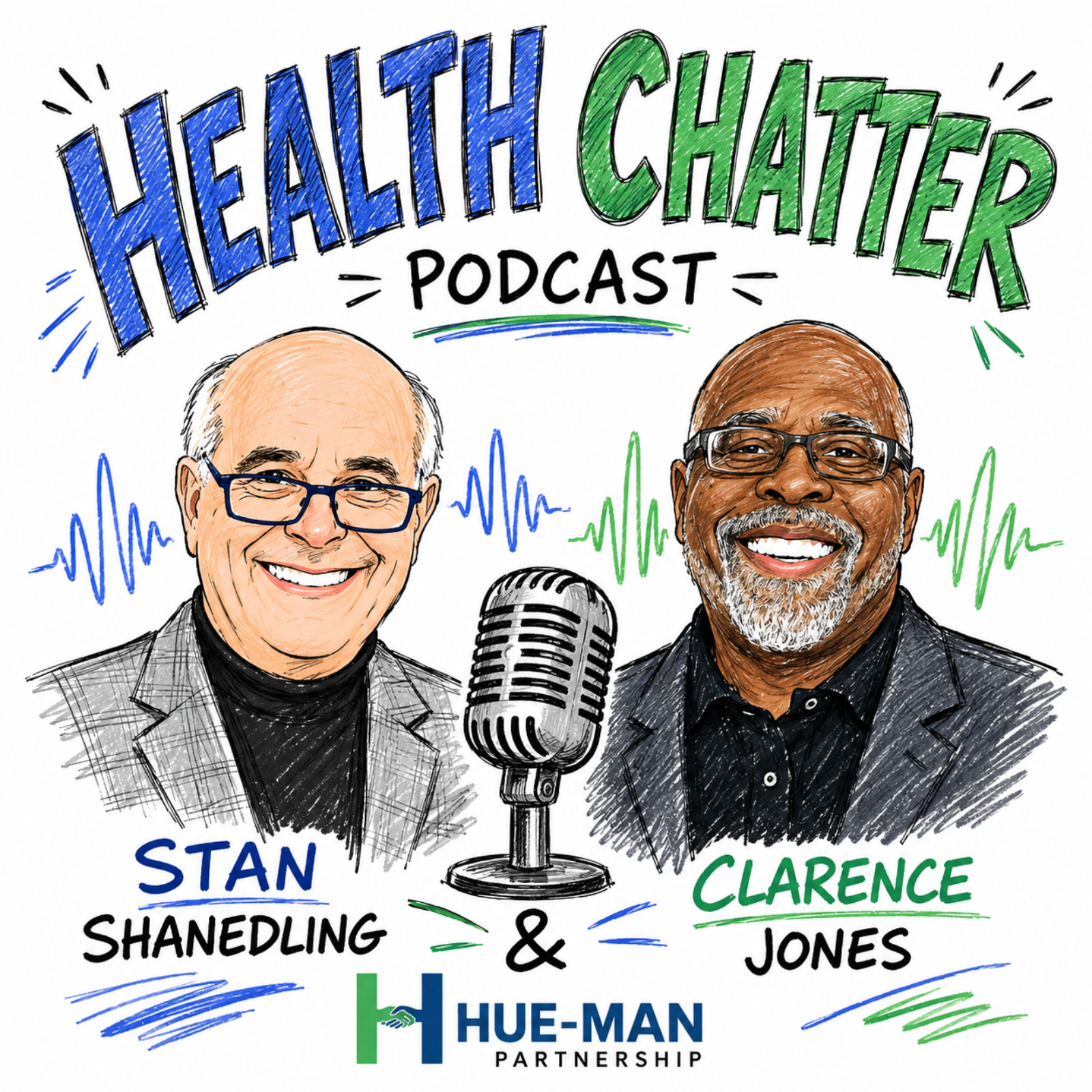


Stan, Clarence, Barry, and the Health Chatter team explore Mobile Screening Innovation and MammoLink with Dr. Ryan Polselli.
Dr. Ryan Polselli – Founder and CEO of MammoLink – is a fellowship-trained breast radiologist who left the traditional hospital system to reimagine breast cancer screening through mobile imaging. Under his leadership, MammoLink has rapidly grown across Florida, providing more than 55,000 screenings through its fleet of mobile imaging units while partnering with employers including Walmart, Amazon, Costco, and Royal Caribbean. Dr. Polselli also developed RAIN (Real-Time AI Navigation), an artificial intelligence system designed to enhance breast imaging services, and leads the Think Pink Project, a nonprofit dedicated to expanding access to breast cancer screening in underserved communities.
Learn more about Dr. Polselli and MammoLink at https://www.mammolink.com
Join the conversation at healthchatterpodcast.com
Brought to you in support of Hue-MAN, who is Creating Healthy Communities through Innovative Partnerships.
More about their work can be found at https://www.huemanpartnershipalliance.org/
Introduction and Welcome
Stanton Shanedling: Hello, everybody! Welcome to Health Chatter! Great show today, interesting show. We're going to be talking about mobile screening innovations, which is becoming more and more popular, and perhaps even more needed as we address the issue of access to care, for sure.
So we got a great guest who's down in Florida. I'll get to him in just a second. We have a wonderful crew; I always like to recognize them: Maddy Levine-Wolf, Erin Collins, DeAndra Howard, Ariana Tordoff. Ariana did our background research for us today, so thank you to her. Matthew Campbell is our production guru who puts out the shows to you, the listening audience, with a little bit of music attached. So, thanks to everybody. Sheridan Nygard also does some of our research, and also our marketing as well. Dr. Barry Baines is our medical advisor for our shows, and of course, there's Clarence Jones, who's… all these people are great colleagues. And Clarence and I were the ones that started it from day one. So, welcome to everybody today.
Hueman Partnership is our sponsor for these shows. It's a really innovative, and Clarence is going to talk about some of the things that they're involved with as it relates to today's topic. Very, very good community health organization, creative endeavors. Check them out at huemanpartnershipalliance.org. And of course, check us out at Health Chatter Podcast. You can see all the shows there. You can read them, because we do the transcripts of them, if you'd like to read them. You can also see all the ones that we've done up to this point, and it also allows you, the listening audience, to provide any questions that you might have, and we can get back to you on them at healthchatterpodcast.com.
Introducing Dr. Ryan Polselli and Mammalink
Stanton Shanedling: So today, we are looking at mobile screening innovations, really, and we have a great guest with us, Dr. Ryan Polselli. Dr. Ryan Polselli is a fellowship-trained breast radiologist who graduated from Emory University with his medical degree, and it's interesting because he's kind of done a switch professionally in order to look at this topic and how it is that we can really get going on it, certainly as it relates to breast cancer screening. He has a company called Mammalink, which I'm hoping you'll be able to give us some more detail on, Ryan. He's also connected with Susan G. Komen and the American Breast Cancer Foundation, and has many of these things going in the state of Florida. We're hoping that it will expand not only nationally, but perhaps even internationally with his vision. So, Ryan, thank you. Thank you for being with us. Thank you.
Ryan Polselli: Yeah, no, thank you so much, Dr. Stan. It's really a pleasure to be here today. I am so excited about this discussion, because, increasingly, this is where we're headed. It's the public health space, and I think we all have a lot to offer each other in terms of our discussion today, so very much looking forward to it. And yes, I definitely want to be in Minnesota.
Stanton Shanedling: Yeah, you got it. Well, you're invited to come up here anytime. So, you know. Clarence, I'm gonna let you kick this off a little bit, because I know that through Human, you've set up some mobile types of units, and I'm sure there might be an interaction between the type of work that you've been doing through Human, and also what Ryan's been doing, so go ahead.
Clarence: Yeah. So, thank you, Stan. Dr. Ryan, I really appreciate reading about your work. And what's really exciting for me is the fact that you're doing these breast screenings, but you're also looking at it from a public health perspective, which is, you know, it's just not the clinical aspect of it, but it's also the education and making sure that people have the resources, and so that makes it exciting. So, can you tell me a little bit about how you got to the point of putting out a mobile unit? Let's talk about that prior.
Ryan Polselli: Yes, yeah, no, I mean, that's a good question. It's a great starting point. So, I actually kind of fell into it. I had a little bit of exposure because there was a guy that owned a mobile breast cancer screening company years ago, and he needed somebody to read for him. I was doing my own private thing at that time, kind of branching off, and I was like, yeah, sure, I'll read for you and see.
While I don't think the actual medicine or the service was really that advanced, they did show up. And what I found was that people were getting on the bus all the time regularly. When they'd go back year after year, I didn't see them skipping like I did in the traditional outpatient imaging center. Consistency was off the charts. To a degree, I was a little kind of, I don't know, I didn't want to admit it, because I really felt like, oh, well, people need to come to see me because I'm the expert, and I'm at the hospital, and I do this, and the biopsies, and all the advances. At the end of the day, it really just came down to the fact that they had the opportunity to get screened right there, and they were willing to do it.
So it really changed my thinking, took some time for me to accept, but once I did, I said, you know what, we're on to something here. Then I started to look at everything through that lens, and I realized, hey, why are people skipping screenings so much? This is an unofficial figure, but it's up to 45 million women in the United States every year that don't get screened on a yearly basis, that is. And so that's a huge issue. Anyway, so I started to look at it, and when I had the opportunity to do my own, I said, you know what, we can do this a lot bigger, better, and here we are.
Financial Barriers and Legislation
Stanton Shanedling: You know, as I was reading about this from a public standpoint, to a certain extent, we've had mobile units. Think about ambulances; those are certainly mobile units. But they don't necessarily do the type of screening that you're talking about. Yours is really into imaging, correct?
Ryan Polselli: Yes, correct. Yeah, we are exclusively breast imaging at this point, so everything related to breast cancer screening and diagnosis, we will do. So, the mammograms, breast ultrasounds, right up to the point where somebody would need a biopsy.
Stanton Shanedling: Alright, so a lot of things kind of came to my mind. Cost. Yeah, overall cost just to develop this.
Ryan Polselli: That is the biggest factor, absolutely. Biggest factor.
Stanton Shanedling: Alright, let's start there. Tell me the barriers or the ups and downs with that right now.
Ryan Polselli: Gosh. It is very expensive. Much more expensive than just putting in a traditional outpatient imaging center. The amount of money that you spend on making this whole thing mobile compared to what you would do if you rented or leased a space in an outpatient imaging center, I mean, it's just almost prohibitive. And there's a reason, if you look around the United States today, you don't see many organizations where they have multiple screening units like us. It's mostly kind of, you know, University of Florida has a bus, MD Anderson has a bus, right? So there's kind of these token, almost like a billboard on wheels, really just to do the community involvement, and it's heavily funded, and it doesn't make any money, and it's not profitable, so you can't operate it at scale. We have to pinch every penny and really try to make it work because the reimbursement that we're seeing from Medicare and the way that everybody sets their rates right now, it's almost not feasible.
I will say one thing, and I think this is the thing that has changed it for us, and I think this is the thing that might change it for everybody moving forward in the future: in the last, I'd say, 3 to 4 years, really, states have been passing legislation that mandate insurance companies will cover at no cost supplemental breast imaging with breast ultrasound. That's about 50% of patients that have dense tissue that need that, because the mammogram isn't as effective with the dense breast tissue patients. Because that is now being covered, and like I said, 30 or 50 states have passed it, and I think we're on track to basically be all of them at some point with the way it's going, that's an extra 25% on the bottom line for us. That 25% makes it possible for us to continue to go out there. And of course, donations and things like that, but the economics are, I think, the biggest absolute barrier to making this a full-fledged, full-blown everywhere-availability type of thing.
Stanton Shanedling: So, for the patients, it's not an issue. There's insurance payment, correct?
Ryan Polselli: Correct. Good clarification. For the patients, it's absolutely free, which is beautiful. 100%. Everything, yeah. So basically, it's the hardware, getting it going, for sure.
Operational Logistics and Size of the Units
Stanton Shanedling: All right, Barry, okay. Did you ever in your practice, Barry, see patients that were screened somehow or other, and then they come to you after and say, "Okay, now what do I do?" Or how is it that you connected with these types of things in the practice that you had?
Barry Baines: You know, again, I was in an office, right, and people came to me, just like they came to Ryan when he was based in the hospital. I think, again, the clinical idea, and I will say the public health idea, is that getting out and being able to screen more people for something that, if you get things diagnosed earlier on, may potentially, and in some cases clearly, has a better outcome down the road. So, that's the good part of the screening.
Ryan, you sort of covered the financial barriers to getting into that. Then I also think about some of the operational barriers. For my practice, this was before this was available. That being said, I did work for a company that had a dental clinic on wheels, basically—a mobile van that actually went out mostly to rural areas where there was a paucity of dentists. It was screening, certainly, as well as some minor operative dentistry. The other place where care sort of comes out there that's been in place has been the blood mobiles. Only in that case, it's the other side of that, like, "Come give blood, we'll be on your corner, just come in."
But my two big questions come up in the operational area. Because the equipment is getting better and better, and I'm assuming that it also gets a little bit more streamlined, do you need a double-wide trailer just physically to get out in communities? Albeit mobile, how big of a space do you need for getting the equipment for doing the kind of screening that you do? So that was number one. And then number two, the other operational piece, which also connects, I think, to the financial, is: are there barriers to being in the network of different health plans? They cover screening, but it sounded like you touched on this with the trick being the supplemental piece, because it's not the standard, it's not going to the outpatient center. It's not going to the building; the building is coming to you. So I just wonder if you could maybe kick around a little bit some of that stuff with networks, and then also just physically what does it take to produce one of these units before you even put it on the road.
Ryan Polselli: Yeah. So, basically, we have 5 units and 3 different versions. We have three of the exact same prototype. Everything from a large Prevost—the ones you see going down the road that carry the sports teams—that was our very first one. It's huge, it's massive, and it's almost too big because you can't even get into a lot of places. It's actually harder to move around a parking lot than a semi; it doesn't have that swivel in the front, you know? So we struggle with that one. Then we got a little bit smarter and moved down in size to a 40-foot. Basically, it's like if you take a Winnebago and convert it with all the medical needs and parts, and we have two slides which slide out, which make it nice and roomy. That's probably about the perfect size, because we have basically two changing rooms, an ultrasound room, waiting area, and everything, and you really feel like you're just kind of in a small office space, and it works perfectly. Then the last one we have is a 36-foot, which is kind of tiny. Everybody loves that because they can zip around and get where they need to go, but it is tight. I mean, the changing room is basically just an extra foot or two from each side of your shoulders, but it works.
Logistically, you're correct, from an equipment standpoint, there are all kinds of considerations. Like, even the detectors in the machines, they have to stay between, I think it's 67 and like 86 degrees right in there. In Florida, you constantly have to have temperature monitors, because if it gets too hot, it just destroys the detector. Of course, that's always a concern. Once you get to 5 units, you can't do it manually, so you've got to have a system in place. Then the other thing is internet connectivity. Everything is cellular. So we've got a system that combines like 5 cellular signals into one and gives us a strong enough signal no matter where we are. That's very expensive too, a technical piece, but solving all those makes it self-contained, perfect. There's really nothing else that you would need that you don't have anywhere else, and so that's nice.
To your second question, you hit the nail right on the head, really. The biggest problem with us—it took us 5 years, I'm saying that. It probably took a little bit longer than that to get insurance contracts just to be able to be operational, because everybody was closed. "Nope, we're closed." I'm like, "You don't want this for your patients to access?" They're like, "Nope, we're not interested." Five years! And a favor from somebody on the Capitol here in Florida basically got us into the last one. We had a lobbyist that one of our friends spoke with, and then all of a sudden we got in. And that was horrible, right? So it really prevented us from being able to do anything, and of course, the rates are low and everything else, and you struggle with that. That was the hardest piece of this.
But now, now that we're in, it's the exact opposite we're seeing. This'll be interesting, I think, to you guys: HEDIS. HEDIS measures, I'm sure you all have heard of this, is basically a quality measure for how well the insurance companies are doing. More or less, it's measured in stars: 1 star, bad job; 5 stars, great job. You get more stars, you get more money from the government to supplement taking care of patients. For example, Humana last year went from 4.5 stars to 3.5 stars. They lost $2 billion in operating revenue. And one of the bigger, or one of the easier components to address within the HEDIS score is breast cancer screening. So now, of course, the phone is ringing off the hook with Humana: "Hey, can you guys go here? Can you go there?" to help get their screening measures back up. So, finally, we're completely aligned with the insurance companies, and in this case, I think it's actually a good thing. They've been some of our best partners, and they trickle down the reimbursement effects to some of the physician groups, so we're also getting a lot of calls from physician groups: "Hey, can you come and get my patients that I've been giving them scripts, but they just don't go get screened? But they're going to be here for an appointment, and when they're here, we'll make sure they get on the bus." So, that's kind of how we're aligned now.
Partnering with Employers and Healthcare Groups
Clarence: Yeah, yeah.
Stanton Shanedling: Let me ask… One sec, Clarence, let me ask you something, and maybe you could take this from how it is that patients know where you're at. Okay, so, like, alright, do you advertise that, okay, our mobile unit for breast screening is gonna be at the Target parking lot, or how is it… I mean, or do people just see it and say, "Oh, as long as it's here, maybe I'll take advantage of it"? How does that work?
Ryan Polselli: Right. So believe it or not, I started thinking kind of like you, like, "Well, we'll advertise, they'll know where the bus is, they'll come, right?" That's been less effective for us. So really what has been the key is actually to partner with employment. Let's say it's a Walmart, right? And so, we advertise that we're going to be there in the break room on this date, and then we also advertise to the public, "Hey, it'll be here as well," which maybe gives us an extra 20% of visits. Really, the bulk of everything comes from the partner themselves, whether that be a healthcare group where they have a care gap list—let's say, we have 100 patients that haven't been screened in 3 years, and we want to get them screened. So they'll call ahead of time, get them all ready, and that's where the majority are scheduled visits. But we do have a lot of walk-ins, and the walk-ins sometimes are the most rewarding, because it never fails. You get that person that's like, "I just hadn't got it, but I saw the bus, I got on," and sure enough, we found a cancer. So those are really a rewarding component of the whole thing.
Stanton Shanedling: Yeah, yeah. Clarence, go ahead.
Clarence: Yeah, so Ryan, I really appreciate what you're doing. Here in Minnesota, we have the SAGE program, which also does the screening, and they work with a mobile unit, like Allina and others, but you have 5 units, and that is systematic, and that's really, really great. My question to you, which, first of all, I do appreciate what you're doing. You created RAIN, real-time AI navigation. Kind of unique. Can you talk a little bit more about what that's about?
RAIN: Real-Time AI Navigation
Ryan Polselli: Yeah, yeah, thanks. So, RAIN, we call it RAIN, R-A-I-N, for real-time AI Navigation. Instead of… you know, the first thing that came to us, everybody's using AI to help detect breast cancer, and I do believe it is helpful, and so we got it for that purpose, right? It's a second set of eyes. It's definitely not to the point where you will read in some of the articles that it can replace the radiologist. I mean, we're not even there yet. I do hope that we get there. I actually would think it'd be wonderful if they could replace us, and I think at some point, maybe it will. But we're not there yet.
In any event, it also scores breast density, and so we got the idea, "Okay, well why don't we engineer this so that we can determine what the density of the patient's breast is at the tech console immediately after they get done with their mammogram?" So then we say, "Okay, you have dense breast tissue." Rather than sending you home, getting a letter saying you have dense breast tissue, and then you have to go back—that really turns it into an average 4-week process for most patients. We said that's a barrier too, because, and not to get sidetracked here, but only 3% of patients are getting the supplemental breast ultrasound on average, according to most recent statistics. That means a lot of patients are just too busy and they don't come back. They say, "I got the mammogram." And we know that adding the breast ultrasound to dense breast tissue detects, you know, it's variable, but another maybe 2 per thousand cancers. So we wanted to capture them, do it right there at the same time, and be done, because we don't get a second shot like a lot of these places, right? Especially in the remote areas.
So that's how we did this, and we worked with our PACS company, our network company, the cloud, and everything to have this solution so that we can identify the dense tissue right then and there. We also provide the script right then and there from somebody on our own staff, so it's a one-stop shop. And patients are loving it, as you can imagine.
Follow-up and Downstream Services
Clarence: So let me ask you about the follow-up after the exam. After, you know, if patients find out that they have cancer, what services are available for them, or resources are available for them?
Ryan Polselli: You know, that's our biggest opportunity as a company, and something that we're working on in this next phase, is really trying to cover that downstream. So what we've done is we've partnered with different organizations, physician groups, and as of right now, we're actually partnering with a breast surgeon that's… I won't want to say too much because I'm still working under an NDA, but with a group that we're going to be able to immediately provide the downstream services. This group is so effective and so efficient that, let's say they do have an abnormality, they get a biopsy, they find out there's cancer, they can have their surgery within weeks, which is going to be huge. And a lot of hand-holding, because that's the thing I think patients suffer from the most, is: "What do I do? Where do I go?" A lot of people just feel alone and they don't know.
So this is our biggest opportunity. There's a lot of groups, there's a lot of things. We're making a page on our website which is going to give them all kinds of lists of all the resources and everything, but we basically make sure we hold their hand until they're handed off to somebody that the patient trusts and feels good about.
Clarence: You know, I'm gonna say this real quick, I'm a community person, okay? So, I'm gonna make a suggestion. I know the physicians do what they do, but connecting with a community group will be very, very helpful in terms of getting you the resources that you need as well. They don't do the operation, but the other resources will be there.
Ryan Polselli: No, I agree with you, and you know, we were talking a little bit about, you know, so send me info. I mean, you're not the first person that has mentioned this. I was speaking with another breast cancer survivor recently—she does a podcast, and she's been really proactive in promoting things—same thing. It is that area immediately after the diagnosis and moving forward where there's a huge opportunity.
Stanton Shanedling: Barry, go ahead.
Barry Baines: Yeah, I wanted to build up a little bit more on the downstream services. Obviously, you're able to do the ultrasound and the mammography, and then if, let's say, a nodule is seen where someone is going to need aspiration or a biopsy of that. Oftentimes today, I know a lot of health plans and their facilities really strive to have it… it seems like sometimes it's almost immediate that you practically go from the ultrasound to having the biopsy right then and there. Obviously, when you're mobile, you need to go somewhere else.
I was just curious if you have any comparison between mobile identification for someone that's going to need a biopsy, and the follow-up, because then again, they have to go somewhere else, and oftentimes they get lost along the way, as you were talking before with the density piece. Do you have any statistics on how well you're able to get people to follow up? Because if you identify a nodule, or it's going to need a biopsy, time starts to become critical if all of a sudden you go away for 6 months or a year. Do you know the percentage of follow-up you have with that downstream service that people need next?
Ryan Polselli: Yeah, really good question, Dr. Baines. So, we don't have the data yet. I'm gathering it, and we started an AI data project where everything's going into the AI cloud, so we'll be able to have all of this soon. This is where I think we're going to be able to make our biggest points, whether it be to the groups that we serve to be able to show value or anything like that. Until you have the numbers, it's kind of pointless. So we're working on that.
But in terms of the follow-up, the biggest problem that I was seeing—and this might be a little bit local, too, in Florida—is that a lot of the outpatient imaging groups around here, at least, if you needed a biopsy, they're still sending you to the hospital because they're just not doing them. They couldn't find the physicians willing to do them because the reimbursements are so low. So around here, the big problem was just that, "Oh, here you go," and patients were getting lost. It's one of the things that bugged me the most about that system.
So what we're doing is, we can't force them to go, but they stay on the list with us. Once they have that BI-RADS 4 rating, which means they need a biopsy or something like that, we have them sign a paper. Basically, it just says you agree to allow us to bug you until you get follow-up. They'll stay on the list forever until they get it done, and if there's a financial barrier or something, then we tap into our nonprofit to make sure they get it. But so that's what we're doing in the meantime.
Comparing Rural and Urban Settings
Barry Baines: Great. And then I did have one other quick question, which probably will take time to answer, but just to chew on a little bit: with the mobile capability, is it more effective for rural areas, where distance becomes a real problem, versus bringing that mobile capability into highly dense urban settings, where oftentimes there are other issues, like transportation deserts? It's so difficult for people to get to a facility that, even though it's in a city, that's a real problem. So I'm just wondering if you could give me a sense of balance between rural, urban, and what you see in the future for how those can be addressed.
Ryan Polselli: Yeah. And, you know, you guys are gonna have to bring me back, because the hardcore data from this we're still uploading, like I said, into the cloud, so this is all gonna be… everything's tracking. We're tracking everything now, and putting it all into Snowflake in the cloud to be able to tell for certain. But I can tell you anecdotally, just by what we've observed over the last 3 years, I was under the impression that it would be the rural areas where there was going to be clearly the most benefit, and I'm surprised at how much benefit there is in the non-rural areas and in the urban areas.
Typically when we go to an area where there's, let's say, a county where there's not even a mammogram unit, and we go and we screen there, we definitely find more cancers. In fact, just a side note, our average breast cancer detection rate is at least double what the average national cancer detection rate is. I think on average, they're seeing just a little over 5 cancers per thousand; we exceed 10 per thousand all the time, almost every month. I think in the last 3 days, we found 6. So, it's a very high cancer detection rate, especially when you go to the rural areas. I think people just wait. They see a lump, they feel a lump, they're like, "What am I gonna do, drive?" And so it waits, and you get that.
But then in the urban areas, it's just like you said, transportation barriers and stuff. There's access, it's just not utilized. I don't know if it's just busy lifestyles, but to me, it's almost just as effective in the urban areas, just anecdotally. I'll give you the data when we have it all. We do about 50,000 studies a year now, so there's gonna be quite a big number that we're gonna be able to analyze. If there's anybody in the School of Public Health there that wants to help us on that project, let me know.
Stanton Shanedling: Actually, those are good projects for public health schools.
Ryan Polselli: That's what I'm thinking, right? So yeah, anybody's ever interested, send them my way.
Mobile Clinics as Modern House Calls
Stanton Shanedling: So let me, you know, for those of us who are a little older, we remember house calls where physicians come to our homes, right? Yeah. When I was growing up, I was asthmatic, and I remember my pediatrician coming to our homes. If you fast forward to what we're seeing today, it's like these mobile clinics are like a different kind of house call. It's more of a technologically advanced house call, you know? A couple things that came to mind as you were talking here: do you ever partner with other mobile clinics? In other words, they have these mobile clinics, you park right next door to them, and these patients go into these mobile clinics and get their exams done, and they say, "Hey, by the way, literally parked right next door is our cancer screening. Take advantage of it." Do you ever do that type of thing?
Ryan Polselli: We do. We started doing that, and it's a synergistic effect. More people get on board and get their… because they've got a multiple purpose, and so it's just, I guess, the extra push to get out there, right? So they can solve more problems all in one setting. For us, yeah, we're seeing a huge synergistic effect. We partner with… I think it's more effective when we partner with primary care, but we also partner with, like, dermatology on wheels that goes around, and so we see good synergistic effects with that as well.
Stanton Shanedling: Yeah. So, Clarence, have you ever partnered with anything like that in the Twin Cities?
Clarence: Yeah, and in fact, that was one of the things that you brought up, Stan, that we actually are having an event now where we're going to be partnering with other mobile units. We bring them together.
Stanton Shanedling: Yeah.
Ryan Polselli: Oh, there you go.
Clarence: And Ryan, that's the thing that I want to… you know, I'll talk with you a little bit later about that community perspective, because you can… I know that you're already doing phenomenal work, you got a 5.0 Google mark, I mean, so I'm cool, I'm excited for you. I'm excited for you because I realize that there are people that talk about doing things, but you actually are doing some things, and I want to make sure that our listeners understand how important your work is, but also how we might be able to assist as well.
Ryan Polselli: Oh, yeah, there's… listen, there's tons of room for improvement still. I mean, this is our third year, so these things, when we come across them, that's how you get better, and this is definitely an area, so please send them my way. Let's work together on this, because it really does prove everything for everybody when you work together as a team like that.
Clarence: Yeah, yeah.
Demographics and Target Audiences
Stanton Shanedling: Ryan, you know, alright, so you're down in Florida, and what kind of comes to mind are a lot of retired people, for instance.
Ryan Polselli: Yeah, yeah, a lot of retirees.
Stanton Shanedling: Right. So what clicked in my head is, are you seeing any particular age group taking advantage of your technology, that's number one, and any particular cultural group?
Ryan Polselli: That's a good question. Yeah, so we do, as a matter of fact. I thought there would be a higher percentage of retirees utilizing the services, and maybe it's because they have more time to get to the traditional facilities that we don't see as many of them. We do do some retiree communities, especially in the Naples area, or places where there's just massive conglomerate homes where everybody's retired, and so very successful events there because we'll park at the community center, and it makes it easy for everybody. So we will get a high percentage of that.
But, believe it or not, what we're seeing—and this might be partly due to our policy—a large percentage of the younger population is utilizing our services. That surprised me. But we have done something a little bit unique and a little controversial in that we are allowing patients between 35 and 40 to get a baseline screening mammogram. Now, part of that is because of Florida statutes, and we want to abide by them; they say that that can happen. But what we did is we analyzed the breast cancer detection rate in the 35 to 40-year-old age group and the 40 to 50, and it was something like 30,000 patients when we did it at the time. There was no difference in the breast cancer detection rate. And a lot of, of course, the 35 to 40 cancers are more aggressive, and so you have young moms and stuff like that. So we allow that, and we're seeing pretty good turnout from the younger end of the spectrum.
And then cultural groups, yes, we have some where we'll just do an entire cultural group. We'll go to, like, there's a Muslim society, and they have groups that they promote and make it available for them to get screenings, or the Coptic Egyptian Church, or something like that. So we're seeing a lot of very homogeneous ethnic groups and stuff come on our bus, and that's kind of nice.
Weekly Schedule and Routing
Stanton Shanedling: So, you know what kind of kicked in my mind also is, okay, today, Monday, you've got 5 units. Where are they today? Or where will they be this week? Okay?
Ryan Polselli: Yeah, all over, so, that's a good question. As we talk, I'm gonna pull up my calendar here just to give you the real world. But yeah, so everything from Miami… we'll go all the way up to… we do a contract with the state where we call it our statewide tour, and we basically go from the Keys all the way up to Pensacola. Like, for example, today, just scrolling through here, it looks like we have Access Health, which is a health organization, and then we're also doing one for the Sarasota County Government, and then another healthcare group, Palm Medical, which is here in Florida, a pretty big group, and Archwell Health. So today is one corporation, one government, and two or three healthcare groups, and Costco.
Staffing Challenges and Solutions
Stanton Shanedling: The other thing that came to my mind is staffing. Who do you hire to do the work?
Ryan Polselli: Ugh, right after budget, this is the hard one right now, because Florida has a shortage of mammography technologists, and everybody is fighting, and it is so hard to get them to employment consistently. We're really, really struggling with that. We're struggling much less than some of the larger organizations; for example, I won't name names, but some of the large healthcare systems have called us and said, "Hey, can we tap into your pool?"
What we do is we employ them part-time, so anybody that wants to pick up a shift. That way we're not fighting for a full-time employee, which makes it really hard. A lot of the full-time employees are like, "I have my job, but I'd love to work an extra shift or two." So we tapped into that pool, and we have about 75 PRN technologists that jump on board, and so that's really solved the problem.
The next thing we're doing is we're actually making a training program for rad techs to Mammo techs. Big, huge incentive: we do it all for them, we pay for the testing, the training, and everything so that they'll come on board, just with the agreement that all you gotta do is work for us for 6 months or something like that. Then you've got your Mammotech license, you've moved up in the world, your pay is significantly greater, and you solved the problem for us as well. But yeah, the staffing is huge. That's a hard thing.
Then we have to have a CDL driver, and so the CDL… now we have to train CDL drivers how to be medical intake, and so the training is intense. That's a really hard part.
Stanton Shanedling: And then, mechanical upkeep.
Ryan Polselli: Oh, yep. He's just going down the list.
Stanton Shanedling: I'm going down the river. Look at your headaches, right?
Ryan Polselli: Yeah, it's… well, this is what I do. I wake up in the morning, and I look at my phone, and I scream, and I scan down for any mechanical issues. There's a thousand moving parts, and you get five buses rolling around, there's always something. So yeah, that's tough.
Future Scope and Expansion Ideas
Stanton Shanedling: So, Clarence…
Clarence: I just have to say this, yeah, I just have to say this, Ryan, I am truly impressed with your presentation. I think that you self-identified as so many different things that say that you are forward-thinking. I mean, because as I said before, we had a medical mobile unit as well, and so I understand some of the challenges that you are facing, but I think Florida is very fortunate to have you. I think especially in terms of the way that you think. You know, and I look at it from a community perspective. Now, you know, I'm sitting here, I'm listening to you, I know others might look at you from a clinical perspective. I'm looking from a community perspective. I'm like, yeah, this is definitely gonna work.
Ryan Polselli: Yeah, well, I like that. I'm gonna record this and let my wife hear it, too.
Stanton Shanedling: So, do you see any other advantages? Like, for instance, you know, in my background in the cardiovascular arena, blood pressure screening. Yes, I mean, you could… that would almost be an easy one to add on, you know what I mean? These types of little add-ons, which I'm sure is probably in your psyche somehow or other.
Ryan Polselli: So, I think I may have mentioned to you guys, we did apply for this Rural Health Transformation Program grant to get 3 more buses, and part of that model that we submitted was to involve primary care. So we will have primary care on board, mental health screening, blood pressure, all the vitals, all of that stuff in addition. I think that is gonna be, like I said, because it's been synergistic for us, so we said, "Well, why don't we just incorporate it into our own model?" So we are thinking about that. If it goes through, then we will definitely be doing that.
But you also bring up a good point. There's a lot of other screenings. So, there's now a self-cervical cancer screening kit, and that, you know, the state of Florida has been asking us if we'd participate in. I think it's a fantastic idea—just a small amount of education. We have TVs on all buses with closed-circuit TV, and then to be able to provide that, because it's another big one. And so, yeah, all of these screening services, I would love to be able to incorporate, and that's something that we're looking at doing in the future, for sure.
Stanton Shanedling: Yeah.
Ryan Polselli: For sure.
Conclusion and Final Thoughts
Stanton Shanedling: So, Barry, what's… what's the exciting component? I mean, you know, you were an in-office physician, but what do you see, from your perspective, the exciting aspects of this?
Barry Baines: Well, the number one thing, I think, is the potential for accessibility. And then, you know, that's at the top. Well, why is that important? Because if people don't have access, they don't get screened. That has been always the conundrum from a public health perspective, is that we know what needs to be done, or we know what we can do, but if you can't connect people to it, it can't happen, and it's easy to fall off the table. So, for me, it is that accessibility.
That being said, quite honestly, you have to balance that out, and this is for public health, too, with what is the cost of that accessibility, and then it becomes a whole issue of where you prioritize. Because, is it breast cancer screening? Is it cervical cancer? I mean, you could go down the list of things that I think make themselves very amenable to providing that mobile capability. But again, if it's overwhelmingly expensive, who pays for it, ultimately? When you have staffing issues and, in particular for one thing, to just try and add on all these other things, it becomes operationally unworkable.
But even in our conversation, I start to dream a little bit here, not to offer anything while we're having our conversation, but the idea is: what are the high-leverage mobile screening innovations and options? I do want to do a call-out for Ariana and her research, which really got me… Thank you, Ariana, it was really very, very helpful to get me thinking along the lines of mobile screening innovations. But that's something that's going to take a much bigger group of really smart people that have the data to start looking at what is high leverage. I suspect that the breast cancer screening would be high up there. You've been steeped in it, Ryan, so you would probably have an idea, almost biased, too. Like, what are some of the other ones on the horizon?
People these days are sometimes maybe too overly comfortable with everything coming to them. It's like, if you want a meal, you call DoorDash or Uber Eats. That's what my daughter does, whereas I'll drive over to the pizza shop and just get my pizza; it doesn't have to be delivered to me. But I'm that older generation, right, Stan and Clarence? So, but that is my question: do you have any sense of what other high-leverage—not high priority—other high-leverage mobile screening innovations we might be looking at if we peek into your crystal ball for the next 10 or 20 years?
Ryan Polselli: Okay. Yeah, I want to answer this question so bad. You touched on something that I think is really the whole point of what we're trying to do, and that is, if you don't make it economically feasible and you don't make it work financially, it's not gonna work. I think the big patterns of breast cancer screening are gonna follow where the money draws it to happen. It is my belief that putting these at the employers, where people work consistently… if you had one of these sitting at least one day a year at every single place where people work every year, you would see participation and compliance skyrocket and save a ton of money.
What I'm doing now is we're gathering the data, and we're making partner portals. For example, if we have Costco, where we've seen 5 stores and we've detected 5 cancers, we turn the portal around to the C-suite executives, and we say, "Go ahead and query what would happen if we screened 100 of your stores." I know what the data's gonna say, I just have to prove it now. So that's what we're in the process of. They could say if we roll this out to all Costcos, based on what we know about early detection and the fact that all five cancers that we detected said they wouldn't have gotten screened otherwise had the bus not been there, and it would have likely been a palpable abnormality, you're looking at, let's just say, $25 million for however many stores.
I think if we can show that financially there's the benefit there, then we can make it more accessible and really change the whole pattern of behavior in America in terms of screening. And then maybe we quit calling them… and you mentioned DoorDash, and that's funny, because I actually just used that in my pitch in Silicon Valley last week, really, we want to solve that last mile. DoorDash is to dining what Amazon is to retail, what Mammalink is to breast imaging. That's kind of my thought process. We can't deliver it to the door of the house, but we can certainly deliver it to where people work. So that's kind of what I'm hoping to do.
In terms of to answer your last, most direct question, what I see in terms of screening opportunity, I think lung cancer screening. Right now, CT with lung cancer is all done in the hospital. People go to the hospitals when they're sick; they don't go when they're feeling well. If you can get that to where people are, you can provide a lot of value because it has been shown to really, you know, if you get a small lung cancer and you cut it out, you're fine. But it's a big difference if… and people don't know, those things are so sneaky. So lung cancer screening is a big one I think would be really good for this. But financially, it's tough. The reimbursement is very, very low, so I hope somebody can figure out a way to make that work.
Stanton Shanedling: So tell me, any testimonials so far? From people that you…
Ryan Polselli: Yeah, all the time, it's just amazing. I mean, it's the part that keeps us going. We have one of our drivers, she keeps a wall of all the letters behind her, kind of thing, and you just go and you just see them. Sometimes I don't even get to see them, and then I read through them like, "Wow." But yeah, we do a lot.
We moved to Date Spectrum last year, and just happened to find one of the stage zero breast cancers. She literally said, "I would have not been screened at all were it not for the fact it was there." And with all her friends, it kind of turns into a social function, right? "Come on, help the girls go on the bus," you know? So there's like some camaraderie there, and I think that really helps. She was saying she got on because one of her friends was like, "Come on, let's go. I'm not gonna let you sit there, you gotta get your screening." She got screened, and it was stage 4 cancer, she's cured, so… lots of nice testimonials like that all the time.
Stanton Shanedling: I agree.
Ryan Polselli: That makes it worthwhile when you're pulling your hair out.
Stanton Shanedling: Well, I'll tell you, this subject has great potential from not only the prevention standpoint, but also the intervention standpoint. So, Barry! Last thoughts?
Barry Baines: I think I've said it all. I've put everything on the deck. I got my whole list.
Stanton Shanedling: Got your whole list.
Barry Baines: Yeah, yeah, yeah. And it was really good hearing about this. My last thoughts are that this is still very much in development. I mean, it's unfolding as we speak, and for me, it's kind of fun to get to talk with one of the pioneers in an area that I think, not only for breast cancer screening, but moving forward into the future, we might be seeing more of this if we can figure out some of the real problematic operational and financial aspects of it. Clinically, I don't think anybody's gonna argue with most of this stuff, but again, it's how do you get it out there,
and how do you pay for it? So, interesting. Again, it was a typical fun Health Chatter conversation on a topic, and I was just glad to have gotten to meet Ryan. In the future, we'd certainly like to hear more back as you move forward with this and get more information and data, and go from there. So, thank you.
Stanton Shanedling: Clarence!
Clarence: Yeah, I think, listening to you, your approach—and this was written down—is that you blend clinical precision with founder-level innovation. And so, it's exciting hearing what you're thinking about, how you're thinking about it, and how you're implementing things. So, thank you very much for the work that you're doing in Florida.
Stanton Shanedling: You know, my last thought is this: let's start Minnesota. But you're on mute, Ryan. So, you know, crossing the border from one state to the next is a potential complication, but the importance of it should really drive it going forward is where I'm coming from. So, Ryan, last thoughts?
Ryan Polselli: Yeah, no, I agree with you completely. I say, let's get to Minnesota. You know, I've got some good, hopeful, positive meetings this week, and maybe we can find a way to make it work financially and to do it. I'm really looking forward to this, and I mean, this discussion is awesome, you guys. It's really refreshing to be able to talk about this type of thing with peers like you all that really understand how complicated it is to make this work. So many people want to just oversimplify it, and it's not. So really, that's very refreshing, and I just want to say thank you.
Stanton Shanedling: You know, things of quality have no fear of time. And I really believe that there's some really strong implications for this. And the goodness of what comes from it should really drive it. Not everything can be measured by the almighty dollar. What needs to be done is: how many lives are we saving by doing these types of things? So, Ryan, like I said before, we're gonna have you back, okay?
Ryan Polselli: I'm ready.
Stanton Shanedling: You definitely should link with Clarence, because we've got some things going in Minnesota, so there might be some really, really good synergy. So, thank you so much for being on the chatter.
Ryan Polselli: Look forward to connecting, Clarence.
Stanton Shanedling: So, to the listening audience, we've got great summer shows coming up. Keep checking us out for new and innovative topics in the health chatter arena. And so, to everybody out there, keep health chatting away.


