Music & Health with Tory Schafer
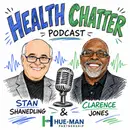


Stan, Clarence, Barry and the Health Chatter team chat with Tory Schaefer - Vice President of Education at YogaSix - about Music & Health.
Tory Schaefer is a musician, songwriter, yoga educator, and trance-informed practitioner whose work explores the intersection of music, breath, movement, and wellbeing. At YogaSix, he helps teachers create yoga experiences that are accessible, meaningful, and connected to the people in the room. Before joining YogaSix, Tory spent 16 years leading yoga education and operations at Life Time and has presented at yoga and fitness conferences across North America.
Tory’s work includes an interest in how music and other embodied practices can give people greater agency in their own wellbeing. His approach incorporates participatory practices such as humming, singing, intentional breathing, and moving to music as ways to reconnect with the body, explore internal states, and take a more active role in wellbeing.
Join the conversation at healthchatterpodcast.com
Brought to you in support of Hue-MAN, who is Creating Healthy Communities through Innovative Partnerships.
More about their work can be found at https://www.huemanpartnershipalliance.org/
Research
What:
-
Creativity can be operationally defined as a dynamic process whereby an individual or group, through the interplay of skills, cognitive processes, and environmental influences, generates a tangible output. (1)
-
… the arts in health care delivery has been shown to support positive clinical outcomes for patients while also supporting other stakeholders, including health care providers, the patient’s loved ones and the wider community. (2)
-
Aesthetic engagement, Involvement of the imagination, Sensory activation, Evocation of emotion, Cognitive stimulation, Social interaction, Physical activity, Engagement with themes of health, Interaction with health-care settings- are all components linking art to health. (3)
Why
-
The Psychosocial Model of Creativity and Mental Health framework suggests that emotional regulation plays a crucial role, as engaging in creative activities provides an outlet for emotional expression and regulation, enabling individuals to process and manage their overwhelming emotions effectively. Moreover, cognitive flexibility is fostered through creativity, as it encourages flexible thinking, problem-solving, and the exploration of alternative perspectives. These cognitive processes enhance individuals' resilience, adaptability, and coping skills, thus promoting positive mental health outcomes. (1)
-
The beneficial impact of the arts could be furthered through acknowledging and acting on the growing evidence base; promoting arts engagement at the individual, local and national levels; and supporting cross-sectoral collaboration. (2)
Who
-
Research by the WHO Regional Office for Europe has shown that the use of artistic media in health care and in communities can have a variety of benefits for health outcomes. They can be used to communicate valuable messages across cultures and political divides, help affected communities understand the risks of certain diseases or behaviors and provide ways for affected populations to process and learn from their individual and collective experience to improve their wellbeing among other benefits. (2)
-
Programs using the arts to address both social inequalities and inequities have been developed across higher and lower-income countries, including in Canada (Quebec), Finland, Lithuania and Latin American countries. (3)
Pros
-
(For example) among children specifically identified as at risk, music has been found to reduce anxiety, depression, emotional alienation, truancy and aggression, as well as increasing school attendance, self-esteem, cultural empathy, confidence, personal empowerment and healthy nutrition (85). Among children exposed to ongoing maltreatment and poverty, group music can help to prevent the development of depression, anxiety, attention problems and withdrawal. (3)
-
The arts in communities provides job opportunities, social mobility, and socioeconomic stability for individuals and communities. (3)
-
The arts can also improve engagement with primary health care. Doctors’ surgeries that have visual art on the walls to maximize patient comfort have been found to have reduced patient anxiety, increased satisfaction with patient–doctor communication and improved staff satisfaction. (3)
Cons
-
Funding for the arts remains at risk within schools and government initiatives.
-
It should not be assumed that the arts are a panacea, and careful consideration the literature and informed design of programs are important. (3)
-
More research is needed about the relationship between art and health, as most studies have only used small sample sizes and been limited in terms of access to effective programs.
Resources:
-
https://www.sciencedirect.com/science/article/pii/S2713374524000098
-
https://iris.who.int/server/api/core/bitstreams/e1cc8536-773d-446f-9822-8ae376f41415/content


